Saturday, June 29, 2019

The Ari Lax Travel Scale

If you have followed me on Twitter for any amount of time, you may be aware that I’m prone to travel… adventures. Or mishaps. I like to think that most of them weren’t my fault, but it keeps happening to me and I have to wonder if I really am a subtle cause or indirectly setting myself up for them.

If you follow Magic design you may be familiar with the Storm Scale. This is a retrospective grade Mark Rosewater likes to apply to mechanics to show how likely they are to return in Magic.

Today, I would like to introduce the Ari Lax Travel Scale. From 0 to 10, how much does the travel mishap impact my life?

0 - We get there at or ahead of time, without any issues.


Believe it or not, this does happen to me sometimes.

1 - You get there with maybe a minor delay.


You leave Boston in rush hour post-work traffic. 

You drive from DC to Pittsburgh and a wild Breezewood appears in the middle.

Your plane takes off, lands, but you are row 37 and wait to get out.

This covers most Magic trips. It’s the “evergreen” state of travel.

2 - Something happens, but just to someone else you know. At most they had a card or two for you.


In the 2013-2014 Pro Season (Theros Block in Magic time), Conley Woods was on some kind of roll. He played a really wild selection of decks at events, highlighted by Pro Tour choices of 3 Birthing Pod Melira Pod in Modern, Abzan Enchantress with no Elspeth, Sun’s Champion or Thoughtseize in Theros block, and Necromancer’s Stockpile Golgari in Standard. 

This wasn’t limited to Pro Tours, his Grand Prix decks were all swings for the fences. One of these times, I felt he had struck gold. This was Born of the Gods Standard, a format of Mono-Black Pack Rat, Mono-Blue Devotion, and Esper Control, and he wanted to play Golgari Dredge with Nighthowler.

Somehow, his flight from Denver just failed to take off. I made it to the event, played his deck, and lost playing for Top 8 with the big Conley brew hit of the year.

That’s just some bad timing.

3 - Something happens to me, but it’s largely an oddity or inconvenience


I look up at the ceiling of the Ted William tunnel, pictured above for non-Bostonians. I can see it because I’m outside of any moving vehicle, walking down the service side rail with the other thirty people that were on my bus.

Well, the broken down bus. We were the problem holding everyone up in horrific Boston traffic, and now the new bus taking us to Logan airport is 20 feet ahead of us loading people in the middle of traffic in the tunnel. 

At least I had 4G service the whole time and left early for the airport. Unlike the elevator incident (a 4.5 on the scale) I don’t think I had the foresight to live tweet the experience.

4 - Something happens to me, it’s a moderate inconvenience, but doesn’t really change my plans. Or it’s a slight inconvenience, but I’m definitely at fault


This is one of the places on the scale where story equity peaks.

PT Hour of Devastation 2017 in Kyoto. I’m flying Baltimore to Atlanta to Seoul to Kyoto. My Baltimore flight gets delayed, putting my connection time through Atlanta in the 20 minute range from landing to boarding closing.

I sprint across the Atlanta airport, make it from B terminal to my international flight in about 12 minutes (Google says this is a mile with human obstacles in the way), and am insanely glad I checked my main bag. 

Oh wait, my checked bag needed to make that trip. Will I even have clothes once I land in Kyoto? Oh wait, my teammates are saying that I read the train schedule wrong and once I land in Kyoto I have 50 minutes to deboard, clear customs with said potential bag, buy a train ticket, and get on the last train to Kyoto or I’ll be stuck in the airport for seven hours. 

I land, and Pierre Dagen randomly arrives at the same time. My bag magically shows up, there’s apparently a bus that is not only faster but picks up later than the train, and I make it to Kyoto. 

But wait, there’s more, and here is where I’m at fault for my own.... experiences.

My behind the times travel quirk is that I never set up international cell access, which means I have no navigation. I have the address of the AirBNB I’m staying at, but it’s English characters with what I can only assume is not enough kanji to be the full address. From my prior experience many Japanese people can read English but not speak it, so I should be fine right? I have a static map of the area on my phone with a GPS pin for me (today’s lesson: GPS is a one way signal and doesn’t require data) but no GPS pin for my destination, just a broad idea of the area I need to go.

My late night cab driver doesn’t read English characters, and I’m appropriately punished for being a stupidly presumptive American. He doesn’t have a GPS, just a digital map. I point him to around right spot, and we head off. He gets me within a couple blocks according to my GPS and approximate knowledge after getting a bit lost, hands part of the fare back to me because he got lost, and I leave.

But wait, it’s not over, and I’m still at fault for this part. I’m outside in the neighborhood, I have a broad idea of where I’m going, but there aren’t really addresses. Or street signs, not that I could read them. And I know the place is down some dead end small street without a clear marking somewhere near the river. 

I do have the Wifi network name and the password though, and my phone has plenty of power. I wander in the right direction, playing high tech Marco Polo, and eventually find the right place via Wifi signal strength navigation. Overall, it takes me about 20 minutes extra.

I still haven’t ever set up international data on a trip.

5 - Something happens to me, I get there on time, but it’s a significant change in schedule


Flying to Grand Prix Los Angeles last August, I scheduled my flight out of Dulles in around 4pm with a short connection in Denver. 

There’s an almost daily thunderstorm in the DC area, that hits the Dulles area around 4pm. Maybe I should have thought this through better.

We land in Denver, I clearly miss my flight, and I check the board for options. There's another flight leaving for LA in 45 minutes, but apparently United just can't put me on it unless I talk to the specific airport customer service agents. Not the phone line, not the gate agent, not their online weather rebooking, just one woman at one desk with 300 other people in line from other flights. After 20 minutes, I accept I'm stuck with the 6am option tomorrow.

Some luck is on my side, and I end up with a bed despite the vast majority of Denver just going yo the GP. Matt Nass was in town due to having hit Platinum, Sam Pardee was flying to the Grand Prix anyways, and that meant there was an open bed to mise. I get there, sleep four hours, go back to the airport for a 6am flight, and get to LA. Without a built deck, obviously.

When I land, I'm greeted with the best possible outcome. The best Jewish deli in the area opens at 7am, it is now 7:30am, and it is directly between us and getting to the site on time to get my missing cards.

Somehow even the messes work out OK in the end.

The rest of the event…. Let’s not talk about that. We are grading travel beats here, not losses due to Magic cheats.

6 - My plans are jeopardized, but largely due to events that don’t physically impact me


Grand Prix Columbus 2018. I’m teaming with Tommy “stainerson” Ashton and Adam “awinnarisyou” Ragsdale.

Tommy is from DC. I’m from DC. Adam is from Toronto. It’s summer, not winter. Keep this all in mind.

I drive the six hours from DC to Columbus because I can take a half Friday. I make it to Columbus on time, order a pizza, and chill in our team Airbnb. Tommy’s flight gets delayed from 8pm to 9pm, then 10pm, then 11pm. Fortunately Jake Mondello is just there to hang out, so I have a backup third on deck in case things go wrong.

Just before I pass out, Adam Ragsdale mentions his late flight out of Canada is delayed 15 minutes.

I wake up at 4am, probably because I ate a whole pizza 8 hours before, to a slew of messages. Tommy isn’t in Columbus, his flight was cancelled because the plane broke, good luck friends. Adam isn’t in Columbus, his flight was cancelled because the plane broke, and they almost locked him in the Toronto airport. 

Because this is still fairly routine nonsense, I shrug and try to assemble a team. Jake is probably asleep, but probably in. I post on the usual circuits, head over to the site when it opens, and decide to ask everyone I know from the area if they have a free agent, and call it quits if I don’t find someone by 9am.

The first local I find to ask is Ben Weinburg at about 8:45am. He says he saw Riley Curran on Discord playing League of Legends at 7am and knows he had no plans to show up. He messages Riley, who hasn’t read any of the Dominaria cards that were just released that weekend but will gladly show up as soon as he can be ready, and I lock it in. 

Jake responds at 8:57 saying he just saw the message but will be there. I sit down for deck build as a team of one. A judge takes pity on me and helps verify a pool with me, and Jake shows up about 10 minutes into deck build as I’ve laid out the playables. Riley shows up 30 minutes later, we have a deck in front of him, he reads all the cards, and it’s go time.

We lose playing for Day 2. Riley was given one rare, a Dread Shade, and had the best record on the team. 

For a one player team as of 15 minutes before the event started, I’ll take it.

7 - My plans are jeopardized, and there was a real chance everything would fall apart


Grand Prix Providence 2011. Notably the Mental Misstep Grand Prix, but that’s not today’s story.

Two cars are meeting up at RIW Hobbies in Michigan and driving down together-ish. I just drove my car down to DC for a SCG Open (a trip that was a solid 4 on the scale with a splash of 8), so it’s someone else’s turn to drive. Their car revs a little hard, but we get on the highway to RIW fine. Before we begin our 14 hour drive one of the four people from the other car runs over, yells “kids in the back!”, and hops in to discuss Storm for the next half day.

We get about five hours into the trip onto I-80 in Ohio. It’s a toll highway with few exits and we are just churning along. Traffic merges to one lane for construction, it starts raining, and now its stop and go. And stop and go, and stop……

No go. 

We get out of the car, with the entire interstate stuck behind us. A neutral push starts it up, but the next time we stop we don’t get going again. As we push the car off the road, we actually see the other Michigan car driving with us go past, with Michael Jacob’s incredulous stare prominently in the passenger seat. “These idiots, I can’t believe someone would just break down in a one lane highway”. 

We convince them (well, not Mike, but the other two guys) to wait at the next rest stop for us as a tow truck arrives. A tow truck with one passenger seat, but a very courteous driver who doesn’t want to leave us in the rain off a highway five miles from an exit. We are told “I’m not supposed to do this, buckle up” and we remain in the dead car as its raised onto the flat bed. Going 70 miles an hour in a turned off car a couple feet up on a flatbed feels as weird as it sounds.

We get to the rest stop, and a numbers problem ensues. There are five spots in the other car. There are three of them, and four of us. The owner of the defunct car opts to wait in Ohio to save money for a new transmission. That leaves two slots, three people, and one solution. 

We game. I’m safe first, and I pull two cards from a Pauper Cube saying one person will have their ride Cancel-led. The first person flips their card up, it’s a 1UU instant, its Ca….psize. The second person, who was the one who arbitrarily swapped cars to begin with, is left in Ohio with a Cancel and the promise of “another car from Michigan is coming in seven hours”. Thankfully Twitter existed, and the internet found him another ride significantly faster.

So yes, I have randomly determined if who was going to be stuck in Ohio once. Once you play for stakes that high, most other gambles aren’t that big a deal.


8 - My plans are jeopardized, and there’s definitely additional risks involved


Grand Prix Montreal 2014, early March.

In October, the drive from Boston to Montreal is basically the stereotypical idyllic Northeastern fall excursion.

From November to close to May it's a frozen hellscape.

There are five of us in Jackie Lee's Prius. We are almost windblown off the road in the Canadian tundra on the way there, right in front of this church with weird, spiky, blood red crucifixes in front of it. Canadians have to be proactively friendly, otherwise the country would likely descend into full on Donner party every winter.

On the way home, we safely make it back to America but it isn't like Vermont is much better. It's about 17 degrees F(reedom units) and icy as hell.

This time when the car engine goes out we are moving, so we can coast off the road instead of pushing.

This time I ask if the tow truck has seating for five before it shows up, as the alternative might be freezing to death.

Of course, it's midnight in the middle of nowhere and the tow truck will be at least an hour. And every person that sees us pulls over to offer help. And each time we open the window, we lose heat.

Fortunately the tow truck is on time while car is still merely brisk and not freezing, actually has seating for five, and is willing to give us a ride back to Boston for the same cost as other transit. We get home an hour or two later than expected, and my bed is really warm that night.

9 - Wait WHAT? You still got there?


“Excuse me ladies and gentlemen, you may have smelled that. There’s a bit of an electrical fire somewhere. We aren’t quite sure where, and it’s not causing any issues yet, but we are going to take the plane in juuuust to be safe”.

That’s not really a paraphrase. When your pilot says something like that, you tend to remember it almost word-for-word.

At least this was on the leg of the flight to Hawaii that was over land, as opposed to the Pacific Ocean.

Specifically, that land was Iowa, and not Des Moines. Waterloo, Iowa technically has an airport you can land a 747 at, but not enough seats for everyone once they get off the plane that is still ON FIRE SOMEWHERE BUT WE DON’T KNOW WHERE.

The mayor of Waterloo was on it though, with free pizza and a bus to the casino, which made things a lot better as we waited for a new, significantly less on fire plane to show up.

10 - I miss the event, or the issue is seriously traumatic


I have yet to experience a 10 on this scale. I really don’t want to. 

The closest I’ve come is booking Spirit a red eye flight. I wisely skipped that entire event for unrelated reasons.
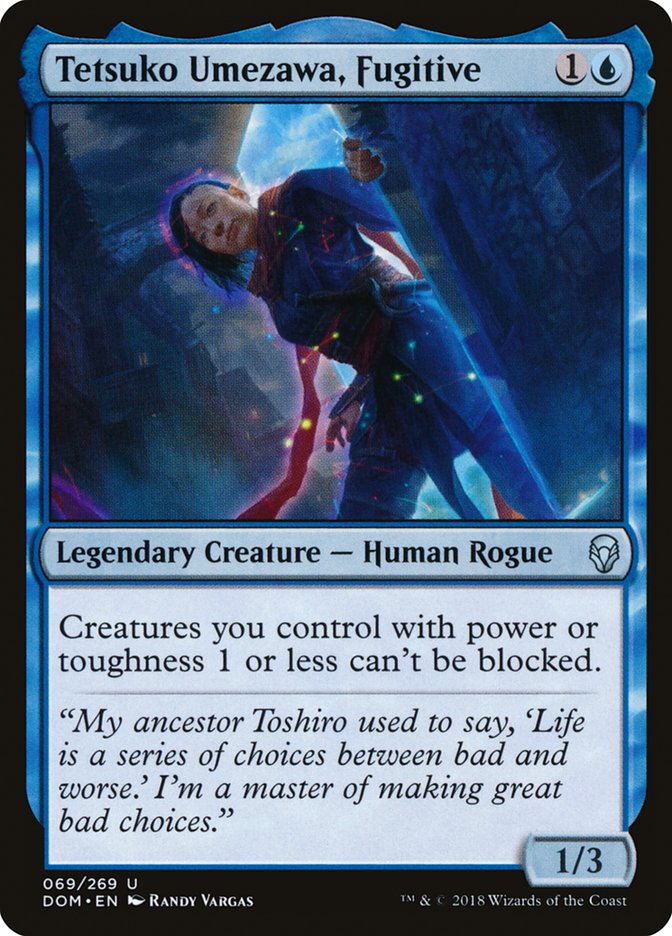


To quote a recent flavor text favorite on mine: “I’m a master of making great bad choices”.

Thursday, June 6, 2019

The Unknown Shores Rant: The Cost of Fixing in Limited

Last post there was a rule of War of the Spark Limited I skipped. Because it’s this entire post instead.

Rule #6: Splash Less Than You Think, Then Even Less Than That


Why? The fixing just costs too much.

Let's define what too much means.


Shimmering Grotto and Unknown Shores have been around a long time. For a lot of that time, I’ve gone to a classic (Andrew Cuneo?) quote for these cards.

“You know they allow you to play as many basic lands as you want?”

When you play Shimmering Grotto and use it for colored mana, your spell costs one more.

In your average Limited deck, how many cards would you be happy paying an extra mana for?

Have you played Limited decks where your cards are all slightly overcosted D-level playables? It is horrible, and you lose a lot.

That’s what happens to your on color cards when you play Unknown Shores. Sure, if it was an off color basic land you couldn’t cast your spells, but playing a turn behind the whole time is still really bad.

This also applies to the spell you are splashing. The issue is a bit more debatable here, but keep in mind it is still an issue. I would pay gladly 3B for Ob Nixilis’s Cruelty, but I’m unsure I would be excited to play that card if it meant risking my mana for the rest of my deck.


The real failure point is when someone splashes a multicolored uncommon creature this way. Pirates and Dinosaurs in Ixalan were huge offenders. If you splash Storm Fleet Sprinter and pay four mana for your 2/2 haste unblockable, is that really better than an on color four drop?


The one thing Unknown Shores is okay at is making all five colors at once. Mountain doesn't cast Doom Blade and Lightning Strike in your Azorius deck, but Unknown Shores does.

My usual answer to this kind of deck building is just play better mana and worse cards. Unless the cards are super broken rares that autowin games when cast on turn five or turn fifteen you aren't gaining enough, and even then Unknown Shores better be the last piece of five color fixing you need on top of a few others. You can wait for a format with better five color fixing to have fun.

This is probably a good time to bring up the caveat that splashing without any fixing is typically a bad idea. I don't have the true numbers, but the basic gist is you usually need at least eight sources of your primary colors to reliably cast those spells early. You need three sources of your splash color to find it semi-reliably, two if you are OK waiting until you have seen a larger portion of your deck. The bare minimum for a two color deck and a splash is eighteen lands, and that's straining your mana to do it. This worked in Dominaria where the format was slow, full of card draw, mana intensive so eighteen lands was good already, and having another impactful card mattered a lot, but not every format is as forgiving.

War of the Spark Fixing Costs


The big issue with splashing in War of the Spark is taking a turn off. The concept of playing to the battlefield is just hammered home again and again by planeswalkers on both sides. If you take a turn off for fixing that's a wrap.


Hmm, that sure looks like spending a card and a turn.


That's also a turn. So is Gateway Plaza.


That's a turn spent producing a creature and fixing. And Paradise Druid blows all of these out of the water as a fine two drop that lets you dump your hand faster and splash.

I think the point should be clear. The non-green fixing costs a turn, the green fixing largely doesn't.

I'll also bring up that if you aren't green, you are blue or in Mardu colors. Mardu trios are too proactive to want to typically splash, or Orzhov which has its own issues. Dimir and Izzet already struggle with playing to the battlefield to defend and pressure planeswalkers, splashing only opens that weakness up more.


Azorius though I don't mind a splash in. The spots where I've found splashing in non-green decks to work are largely on the back of the cheap, easy to pick up white removal duo of Gideon's Triumph and Divine Arrow, using those to recover the lost tempo.


I'm still splashing unbeatable rares if possible, but my bar for possible is higher. I'm also way more partial to non-planeswalker rares that don't get much worse if I spent a turn fixing. The odds I splash Enter the God Eternals off colorless fixers are higher than the odds I splash Sorin, Vengeful Bloodlord.


Again, this is all outside of green. In green, I'm fine mixing fixers that play to the battlefield with those that don't to get workable splash mana.

Why is New Horizons exempt from this? First off, the +1/+1 counter is often relevant battlefield presence. The proliferate upside is really overstated, but it's there. And the double fix lets you splash even more absurd cards like God Eternals, making New Horizons unique for the format.


To look back a set to Ravnica Allegiance, splashing was great even at fairly high costs (Open the Gate for Gateway Plaza is how much mana?). The reason is simple to derive. There were absurdly high power uncommons to splash that could easily make up for spending that time, like Archway Angel and Gates Ablaze. Even in a not all-in Gates deck, the multicolor cards were just distinctly. If your opponent played random mono-color creatures with untapped lands, then you played Aeromunculus and Frenzied Arynx with mostly tapped lands you were way ahead.

And unlike Guilds of Ravnica, these splashable cards were just face value good without synergy. In that other format, you could splash good removal like Artful Takedown or Hypothesizzle, but the power in multicolor cards was largely low cost creatures like Skyknight Legionnaire or linear payoffs like Goblin Electromancer. You could splash but the odds you found a card worth it were just low enough that it was unexpected, where in Ravnica Allegiance the main reason to not splash was that other people took all the fixing you needed to reliably do that.


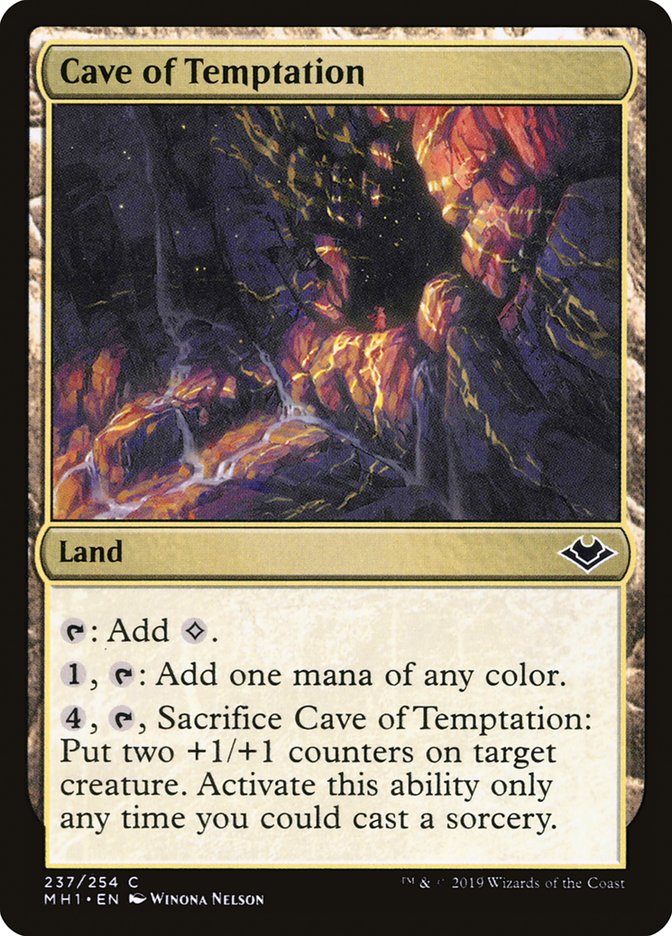
This all brings us to the Unknown Shores variant in Modern Horizons: Cavern of Temptation.

Modern Horizons isn't going to be as tempo-oriented as War of the Spark, just because there is one planeswalker per sixty packs instead of one per pack. I would be into playing Gateway Plaza in this format.

But this is an Unknown Shores, not a Gateway Plaza. It's a per use tax, not a one shot payment.

I'm not going to tell you not to play Cavern of Temptation. Just play it as a land that sacrifices for value more than a fixer.

Tuesday, May 28, 2019

My Five Rules for WAR Draft

Despite the first reactions to rares and planeswalkers dominating games, War of the Spark Draft can be an intricate format. Just drafting cards in colors often leads to really bad decks, even if you have a broken rare or two.

Ok, those decks still win a lot because the rares are really broken, but they could win even more if they were drafted and built right.

After a month of playing the format, here’s how to frame the small decisions of the format to maximize your best cards and minimize theirs.

(In the interest of keeping the main flow together, I’ve moved some of the tangents to endnotes. If you don’t mind a flow break, feel free to skip ahead and read those where they are noted.)

Rule #1: Do Fucked Up Things


Family friendly writing was broken on purpose. I want to emphasize this hard.

The way to win in War of the Spark draft is do something soul crushingly powerful, typically a cascading advantage they can't match by just casting creatures. A rare, a planeswalker, recurring that planeswalker, proliferate starts in white and green, various spell churning synergies in blue and red, and so on.


The only exception is black decks, and "kill all your relevant cards with barely conditional removal" honestly is its own brand of this.

Note that while some of this implies a synergy based format, I'll remind you that a lot of these "synergies" are just "don't be getting crushed so I can cast my one card win" and less cumulative interactions. Honestly a lot of the synergy stuff in the format is underwhelming because it isn't broken and game ending. Getting a card off Spark Reaper sacrificing Grim Initiate is nice, but doing that a bunch still won't match the good things that do more for less mana and card investment.

(End Note 1: Why I Don’t Like WAR Draft)

Rule #2: Traction is Key


Everyone has already said this, so let's keep it quick.


The easiest way to "go off" in War of the Spark draft is activate an uncommon planeswalker twice. 

This is the only broken thing your Tier 2 cards can broadly interact with.

You want basically all your filler to put you in position to attack an uncommon planeswalker and prevent that second activation. All the lower power cards that don't do that are really close to unplayable unless….

Rule #3: Build to Leverage Your More Specific Unbeatable Cards


More unbeatable setups in your deck is a good thing. If all the non-unbeatable cards tend to get washed out (outside of their ability to brawl over planeswalkers), then try hard to use those slots to make more of your cards potentially unbeatable.

This is kinda just "build around your best cards", except only if those cards are things that runaway with games and in ways that make them do exactly that.


The obvious example of this is Mowu, Loyal Companion. If you make this a 5/5 or 7/7 vigilance trample, you almost always win. Your filler creatures once you have Mowu lean more towards Iron Bully than Vivien's Grizzly, spells towards Courage in Crisis over Bonds of Flourishing, and so on. What other cards tie to this? Obviously the Selesnya Proliferate deck, but also in green-red Courage in Crisis is great with Spellgorger Weird making Mowu a solid fit in some of those decks.


A trickier example? Trusted Pegasus is a driving reason to play combat tricks.

Combat tricks are really bad in this format because they aren’t great traction. The fact that they don’t unconditionally advance your board state makes them bad when defending your planeswalkers, and when attacking their good planeswalkers they don’t stop a block. You attack, they block, you trick, you traded one card for a card, and they get to activate again for more value and just drop another doofus, you end up behind.

But what if you minimize the number of creatures they can block with? When they block and you Giant Growth a Trusted Pegasus, are they really that likely to produce another flier? They already took a hit from your other attacker, how many more of those can they take before dying? What if your trick was Battlefield Promotion and now your 3/3 Pegasus outsizes the random 2/3 fliers? 


Large numbers of Raging Kronch and just being a deck full of 4/3 and 4/4 attackers is another similar spot. They can probably try to trade once for a 4/3, or produce one Ashiok’s Skulker to block, but the second time is much harder if Giant Growth got involved.


Another example: If your planeswalkers are three drops that don’t protect themselves like Narset and Davriel you want to have cheaper creatures to defend them, but if they are five drops like Jaya or Ob Nixilis your three and four drops matter more to defend against the creatures you can expect to be hanging around then.

Remember, the focus here is game ending synergies, not small advantages. Rescuer Sphinx plus Guild Globe isn't that important. Thunder Drake plus Contentious Plan more likely is.

Rule #4: Pick Orders Are Flexible


I’m a bit of a stickler for pick orders these days, and think a good pick order is super important for navigating the first pack of a draft. I really want to have a strong idea of the relative power of every card, so that when I am faced with a pick I have the closest thing possible to a discrete value of each card.

I wouldn’t say War of the Spark throws that out of the window, but it matters less.

I’m still very strict about taking distinctly better cards. If my first two picks are blue and I see Pollenbright Druid versus Sky Theater Strix, I’m taking the B-minus Druid over the C-level Strix. 

But when it comes to stuff like Ob Nixilis’ Cruelty versus Prison Realm, Bloom Hulk versus Spellgorger Weird, Callous Dismissal versus Law-Mage Enforcer, I don’t really care enough to figure it out. Normally I would make sure all of these are “close but clear”, but WAR draft makes them swing too much to matter.


A big part of this are the previously mentioned broken rares and planeswalkers. There are around 20-30 cards so impactful that biasing your deck to play them overrides taking slightly better cards. Probably more, because even a good uncommon planeswalker is so high impact on a game that it pulls me to draft that color.

So even if I think Spellgorger Weird is better than Bloom Hulk without context, if I first picked Nissa or even just Vraska I’m probably taking the 4/4. For a similar reference, in Dominaria if I first pick an Untamed Kavu I’m still second picking Academy Journeymage over Baloth Gorger or some similar equivalency, because there are half or a third as many cards that have that level of forcing payoff.

Another big part of this is that there’s such a huge power level disparity between color pairs, especially once you are partially married to an early rare or planeswalker. Usually I’m among the most open ended drafters, willing to draft whatever if it’s open, but this format that just isn’t the case. You actively need a reason to draft most of the white archetypes, black-white is super corner case reliant on large numbers of rares or planeswalkers.

There’s even a huge disparity in the quality of a bunch of other archetypes depending on which color you are based in. 


For example, green-red as a green-base assertive creature deck or ramp deck has been unimpressive, but as a red-based spells deck has been really nice. Or black-green as a green-base creature deck compared to a green-base ramp deck or black-based control deck, and so on. 

(End Note #2: WAR (Sub)Archetype Ranking)

So if you are faced with a second pick Callous Dismissal versus Law-Rune Enforcer and your first pick was Angrath, Captain of Chaos I’m slamming Callous Dismissal as white-black and white-red are two of those sub-par color comboes. But if my first pick was Vivien, Champion of the Wilds I might just take Law-Rune Enforcer because green-white creature works out better on average than green-blue creatures/tempo.

Also, there’s the next rule…..

Rule #5: All Things Being Equal, Start Mono Color In The Draft


I’ve talked a lot about broken rares. You want the chance to open a broken rare pack two and take it, and you want to lose the least prior investment possible to do this. The easiest way to do this is just not have invested a lot in a second color.

So imagine a scenario of Callous Dismissal versus Spellgorger Weird. If you first picked Kasmina, or if you first picked Jaya, you should just take the card that lines up with that color. Callous Dismissal is slightly worse than Spellgorger Weird, but they are in the same ballpark. 

Again, I’m not justifying drastic deviations here. If it’s Spellgorger Weird versus Jace’s Triumph, I’m taking the Weird regardless of whether my first pick was Kefnet. But if the pick is remotely close without context, it becomes real easy if you can stay in line with prior picks. 

I do think this plan works best for the Grixis colors compared to Selesnya ones. They are just way more self consistent as you go down the card list. 

If you just take all the red commons and uncommons, they tell a story of bulky aggro with a higher than average spell count and often some fodder to sacrifice. 

The black cards tell a story of a deck really able to control the game by answering anything, with a few ways to end up with value so your large number of 1-for-1s ends up with you ahead and some evasion to manage planeswalkers that sneak through.

The blue cards, whatever. It’s just what blue always does. The cards all look like they might do nothing, then you play games and every blue deck is always up a million cards and answers all the things and it was never really close

White though? Trusted Pegasus, white’s second best common, is largely Wind Drake in 40% of white decks. Divine Arrow is in a similar space, Makeshift Battalion ranges from solid in the right aggro deck to unplayable even in another aggro deck, it’s just a mess.

Green? I can just point to Bloom Hulk versus Centaur Nurturer. 

Not to say that I won’t stay mono-color in green or white, just that I’ll pay more attention to if the card I’m picking is good in the abstract or still good in context of my prior picks. If my first three picks are Vivien, Mowu, Band Together a Centaur Nurturer isn’t really staying strongly “on color”.

There's a lot more to dive into in War of the Spark draft that really gets into the card-by-card weeds, and honestly almost all of it can be erased if you have to face the worst case scenario cards. But if you follow these rules you have the best chance of overcoming some of the absurd things that regularly happen in this format.


End Note 1: Why I Don’t Like WAR Draft


The synergies all being super charged and fairly cascading is where I struggle to enjoy War of the Spark draft, because these strategies don't interact with each other in interesting ways. There's a lot of snowball games, with planeswalkers that swing from terrible when behind to unbeatable if stable or just someone turboing out 5/5s. It's to easy for most of the cards in a game to only matter in context of the scramble to position a card that suddenly blanks all of their cards. This is dynamic, but in a horrible way.

It's almost the reverse of Guilds of Ravnica, where the draft portion was largely autopilot after the first picks but decisions on the game and match level were absurdly deep and paid off. In WAR  it feels good to try and optimize your deck build and early game setup, but a lot of games feel hollow and like a lot of earlier decisions get erased. 


End Note #2: WAR (Sub)Archetype Ranking


This is down here because the details of it aren't that important. Feel free to yell at me on Twitter or something if you disagree.

Top Tier Decks:
U/R Spells (either base)
U/B (really anything)

Still Good If Open:
R/B (Top Tier if you get 3+ good removal, bad if you don’t)
W/G Proliferate
W/U Good Stuff
R/G Spells-ish Beats (often a bit proliferate-y too, relies on red low end threats)
G/B/x Ramp (really wants some rare)

Conditional Even If Open:
W/G/x Ramp (need lots of W removal)
G/U/x Ramp (needs lots of off color removal)
G/U Proliferate (need lots of top tier commons)
G/B/x Aggro (needs a very weird mix of removal, amass, planeswalkers, and proliferate)

Avoid Without Rares:
W/R (Feather or bust)
W/B (multiple unbeatable rares, or many good planeswalkers)
W/U Aggro