Showing posts with label Bo1. Show all posts

Thursday, January 3, 2019

Ravnica Allegiance Mechanics for Best of One Draft


#5: Adapt


Yea, it's trendy and all to bash adapt these days. The mechanic is solid for Traditional Limited, where having early plays that are good draws later on is important, but Best of One isn't really about that. Mana sinks are significantly worse if you can expect to have spells to spend all your mana on for a long time, and the opening hand fixing makes that much more likely.

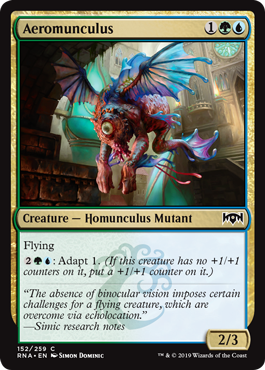
That said, this is a good Vanilla Test reminder. I'm not going to drop a card in value because it has adapt that I don't think will be activated that often, I just think its baseline stats will matter more. Aeromunculus is a perfect example of this. I would gladly play a three mana 2/3 flier in Draft without an upside, the fact that it has adapt is just nice on top of a solid playable. Take and play the already fine bodies with adapt, as at the worst the ability represents a combat boost making blocks difficult, but don't fiddle too much with the ones that make you spend extra mana before you get something out of them.


#4: Addendum
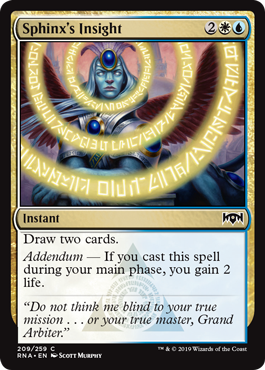


The difference between Best of One and Traditional matches has almost no impact on addendum. The power level of each addendum card is largely tied to the literal text printed on it.

One we have the full set revealed, then we can start making some second level assumptions. For example, Sphinx's Insight is pretty mediocre in Best of One by virtue of being an expensive way to draw few cards. When trying to evaluate addendum cards in context of Best of One, ask the following questions:

-Does this card tangibly impact the battlefield, or am I using a valuable durdle slot on it?
-Am I overpaying for this effect if I cast it on my main phase?
-If I wait to cast this at instant speed, am I always going to want to cast it? Or do I have other things I would want to cast instead?


#3: Spectacle
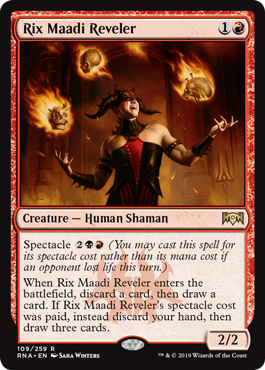

Spectacle is pure weirdness on this scale.

By default, a mechanic that rewards you for getting ahead and attacking should be a bit better in Best of One. So Level Zero is that it is better in a vacuum. But spectacle isn't mentor that always rewards you for attacking, and you can get bricked by good blockers and suddenly your spectacle deck looks bad. So Level One is that spectacle is worse against properly adjusted opponents.

But some of these spectacle cards make it look like conditional kicker, which if it comes with a cost increase goes back to the same metrics as adapt. If I want to play the card normally, great it has an upside. If I don't then I'm not going out of my way for anything short of an exceptional effect. Rafter Demon is well into unexciting territory, and Light up the Stage is an unexciting mana for minimal cards proposition.

So this ends up being another wait and see. The questions are simpler though.

-Is this spectacle card baseline good?
-Can other decks reliably stop me from turning on spectacle with blockers?

I have a feeling that the answer to both is sometimes, so I expect spectacle cards to either gain a fair amount or lose a lot in Best of One on a case by case basis. Watch out, don't get fooled into playing below average things.

#2: Afterlife
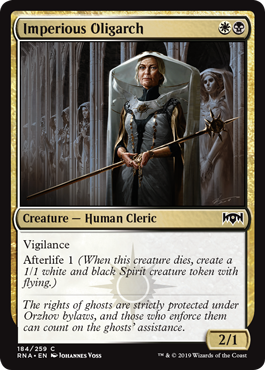


One of the things I highlighted as amazing in Best of One draft is card advantage that plays directly to the battlefield. Afterlife is just that. You cast your creature, make an exchange, and there's still free Spirit tokens for future combat needs.

Once you put tokens on a mechanic, it can really skew a format. Afterlife might be enough to take Ravnica Allegiance Best of One down a peg from aggressive to just proactive. One toughness attackers are going to be really bad because they trade for the back half of a normal Orzhov card.

It also has some Level Two impacts on other mechanics. Slower decks are going to need a number of ways to stop small fliers, and cheap removal that doesn't exile is going to look kinda dumb if it leaves them with a Spirit token. These both point towards spectacle having a metagame upside, where larger ground creatures can attack profitably into the <a href="http://gatherer.wizards.com/Pages/Card/Details.aspx?name=Hitchclaw+Recluse" target="_blank">Hitchclaw Recluse</a> style cards used to stop Spirit tokens and where your opponent needs creatures to stop attackers and not all purpose removal.


#1: Riot
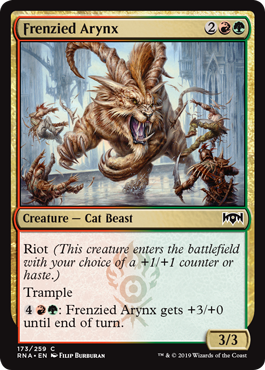


Riot is basically the perfect Best of One mechanic. Haste for games you are racing, larger creatures in games that come down to actual combat fights, and all around just bigger and faster battlefield presence.

In many formats, afterlife would be the defining mechanic for Best of One Limited, but in Ravnica Allegiance Riot ensures huge creatures will be slamming into those 1/1s. The extra size ensures tokens are worth only fractional cards and aren't able to chip away relevant life totals over time. Oh, and having larger creatures makes spectacle enabling attackers less likely to be profitable attacks.

Riot as a mechanic is just raw power on a lot of axes, and all that is magnified in Best of One Limited. It isn't a snowballing, format defining mechanic like mentor was in Guilds of Ravnica, but I expect Gruul to be a strong contender for best guild just based on it having cards like this.


Wednesday, January 2, 2019

Guilds of Ravnica Most Improved for Best of One


Bigger Convoke Creatures


The entire point of convoke is to turn creatures into mana. The ideal scenario involves you playing creatures and lands to set up an early fattie, and in Guilds of Ravnica you are mostly stuck with one creature for one card invested and not token generators.

In Traditional draft, you often have hands with a couple more lands than you want and as a result a few less creatures. Those hands make Siege Wurm horribly clunky and that's why the card went from a game breaker in past convoke formats to mediocrity in this format. I'll play a Siege Wurm in my Traditional Selesnya decks if needed, but I would rather cut it.

In Best of One that whole too many lands thing isn't really an issue. The format makes curving out on creatures even more desireable. Siege Wurm is reasonable to cast almost every game, though still not something you want to draw multiples of. In Best of One I generally want a Siege Wurm, if not a second similar card.

Arboretum Elemental is still trash though. Nine is literally millions. I'm not big on Worldsoul Colossus either but it at least can be cast.


High Drops in Aggro


Light of the Legion was a contentious card in Traditional draft. I was always on the side of wanting a giant flier in my white decks, but other Pros made the argument that a card that costs six did nothing to advance your typical Boros or Selesnya game plan.

In Best of One, you draw significantly less two land hands and more three land hands. The odds of having turn six Light of the Legion from a two land hand are literally half the odds of having it on turn six starting with a three land hand. A six drop from a three land hand is actually easier to cast on curve than a five drop in a two land hand, and you would play a Barging Sargent in a Traditional draft.

Does this not violate what I said about six drops clunking up hands last week? Well, back to the five drop comparison. Yea, sure, your flawless Boros deck might be all cards that cost three or less, but usually you need some high drop hitters for quality and there isn't any better than Light of the Legion. Swathcutter Giant isn't bad either.

It's also a different role. You relied on Cold-Water Snapper to stabilize, and that's awkward. You rely on Light of the Legion to break games that have kept going past the point your main aggro cards are at their best.


Versatile Anti-Fliers


One of the spots you can sideboard heavily to shore up a weakness in Guilds of Ravnica draft is cards that beat flying creatures. Healer's Hawk, Skyknight Legionnaire, and Parhelion Patrol are all common threats you face that are scarier with the Best of One improvement to mentor strategies.

While you don't want potentially dead cards in your deck, both Hitchclaw Recluse and Crushing Canopy cover the spread. The Spider blocks random three power creatures, which includes fliers with mentor counters. Crushing Canopy kills Luminous Bonds and Maniacal Rage, though I'm still not sure if the enhancement auras actually get better in Best of One or are just overpopulated from less experienced drafters on Arena. The only matchup I don't want these cards against is Golgari, and at that point they are just a card that is worse in one matchup like many others.

Honestly, I probably should have started Crushing Canopy in more Traditional Guilds of Ravnica drafts. I was just adverse to non-creatures in green decks due to convoke and undergrowth, and only tended to draft those decks when they were open enough to get other removal.


Lifegain Bodies


There are a lot of lifegain creatures in the Selesnya colors. I would sideboard them all in against aggressive decks like Boros or Izzet, but even with a faster format why would I want to pre-sideboard here?

These are all solid bodies on their own. Three mana 3/3, convoke 3/4, and five mana 4/4 aren't insane head turners, but they all fight at rate against other creatures. I have sideboarded these in against Dimir decks in Traditional draft just to have more threats and less pump spells. If I'm fine having them across the board and they win me the most important matchup of Boros, that's a starter card to me.


Deathtouch Creatures


In Traditional Guild of Ravnica draft, I felt both of these deathtouch common creatures were fine but cuttable filler. They did their job and traded for things, but at the end of the day Spinal Centipede also trades for a card. I would rather have the slightly higher power creatures to pressure opponents who miss lands or spend time not building a battlefield and not have smaller creatures against Grixis control decks.

In Best of One draft, you have to face larger creatures faster. Douser of Lights is distinctly slower than Rosemane Centaur , but Pitiless Gorgon trades on the spot. If a Vernadi Shieldmate picks up a +1/+1 counter from Blade Instructor, Hired Poisoner picks off the 3/3 where a random 2/2 for two mana wouldn't. Your opponent can't Take Heart over your blocker, only the more expensive Sure Strike works. The sure trade is just really important, and you aren't running anyone over with mediocre beats to their good beats.


Tuesday, January 1, 2019

Breaking Arena: Best of One Drafting


I have drafted a lot of Guilds of Ravnica. Probably not the most in the world, but easily triple digit drafts between Magic Arena, Magic Online, and real life. My drafts are also cleanly split in time. I spent the entire Pro Tour lead up testing via classic methods, then started playing Arena after.

And the two are distinctly different formats. They use the same cards, but you need to adjust to be successful. For Traditional draft on Arena that adjustment is small, but Best of One draft is as different a format from Traditional Draft as that format is from Sealed.

Hand Fixing


In Best of One matches, Magic Arena doesn't just draw your opening seven. It draws two hands, then selects the one with approximately the most average number of lands. Or something like that. It isn't quite as clean as just the average-est hand to avoid weird exploits, but it's probably close enough.


So much of good Limited practice, or really just Magic in general, we have learned over the last 25 years is rooted in the idea of mitigating early spell and land imbalance. Many top Limited players cite cycling as their favorite mechanic as it just solves all of this. Cycle your Desert of the Mindful if you drew five lands early, cycle your Rampaging Hippo if you only drew two lands (Future Topic #1: Why Hour of Devastation was really great).

Best of One has much less of this. With more optimal mixes of lands and spells, games are more based on tempo because things remain closer to that. I'm going to throw out the phrase “random walk” for people who know statistics, but here's the easy mode explanation. The most likely state of your mana balance after a few turns is approximately the same as your opening hand.

One of the deeper lessons of Traditional Draft is that you can't consistently rely on your early draw steps to un-mana flood or screw you. The odds change a bit, but they aren't drastic. The inverse is that if you start fairly balanced on lands and spells, you are really likely to have lands and action through the first several turns of the game.

Magic when both players “always” hit their fourth land and have enough spells to reliably curve out looks really different.

If someone falls behind, it's much harder for them to get back from behind. Your opponent is not going to miss a land or spell, so their plays are just going to be at parity with yours. You need ways to effectively tick ahead on a turn, like cheap tricks or removal, or plays that are impossible to match at parity, usually rares.


If you miss a turn of plays, that's falling behind. The easiest way for that to happen is drawing spells you can't cast on time or cards that make you spend mana without advancing your battlefield. Dominaria Best of One took a huge hit here. Divination and Cold-Water Snapper were amazing in Traditional draft, but both were just OK in Best of One. Six drops clog up your hand in the early turns, and Divination on turn three is a liability now. Lots of the Izzet jump-start cards in Guilds of Ravnica draft lose ground here. Maximize Altitude doesn't provide a sticky proactive advantage up the curve, is just a conditional late game breaker that could dismantle out of place draws.


This also hurts splashes or three color decks. Mana fixing costs time, as does the “mana fixing” of waiting to draw your third color. That time cost can really kill you in Best of One.


Draw smoothing also takes a hit if it comes at a cost. If you have lands and spells, why bother spending mana to ensure you have lands and spells? Divination loses ground here again because its main purpose was reliably hitting your fifth land drop. In Guilds of Ravnica draft, that punishes jump-start a ton. Radical Idea is the pinnacle of mana for filtering. Surveil is mostly incidental on already good cards, so it just drops from amazing to solid.

If both players keep making similar drops and drawing cards for mana is a real cost, card parity is hard to break. Mulligans hurt more, both on physical cardboard and because you are less likely to hit drops on curve. If my hand might miss on color but has plays I'm more likely to take a risky keep. Keeping draws that won't hit curves is worse than normal though so ship those brick draws right away. Card advantage without spending a turn not impacting the battlefield is always insane, it's just now more insane.


What gets better? Any mechanic that provides increasing advantage for battlefield presence. Mentor and convoke are huge winners in Guilds of Ravnica, not that mentor was bad. Convoke is just great when you have lands and creatures up the curve, but stalls cards in your hand if you miss a drop which just doesn't happen as often.

Sideboarding


Despite being the main thing that jumps to mind when you think of Best of One, sideboarding is one of the smaller Arena impacts on Draft. Two reasons: hand fixing skews things way too much already, and sideboarding is often specific to their exact cards.


The first one is simple. If drawing blanks is really punished, can you afford to draw a Mephitic Vapors when they curve Vernadi Shieldmate into Rosemane Centaur and not Fresh-Faced Recruit into Blade Instructor? Main decking a true sideboard card in Best of One might honestly be worse than doing it in best of three. At least then you can reasonably put a Radical Idea in your deck to fix drawing your bad card.

The second is just good Magic. Not every Boros deck is going to fold to Mephitic Vapors. They might be less Ornery Goblin, more Vernadi Shieldmate. These are things you have to evaluate based on the actual cards you see in a game, and Best of One will never let you do that. Pre-sideboarding against an archetype these days isn't 100% effective like Gloom was. 60% of the time it's reasonable, not every time.


Where I like to make up pre-sideboarding ground in Best of One is with cards that are more general purpose effective with upside against cards or archetypes. The best example of this is Hitchclaw Recluse. I rarely played Hitchclaw Recluse in Traditional Guilds of Ravnica draft because it was reactive in Selesnya and didn't trade in Golgari. In a more proactive Best of One format any three drop plays fine, and green needs ways to hedge against fliers that it can't race.

Bots


(Future Topic #2: Drafting with Bots)

No, this isn't just a place holder, it just is a whole entire new set of implications that apply to Best of One and Traditional draft. This is also going to be very presumptive. I know how bots can be programmed, I can make guesses as to how Wizards of the Coast has them programmed, but I don't have their code base so I can't say for sure.

Best of One specific guesses? The name of the game with bots is exploits, and I would assume Best of One and Traditional use the same bot evaluations. That's going to create some gaps where cards that are vastly improved in one format sneak through for the other. Do your best to figure out what cards the bots undervalue for the format you are drafting and adjust accordingly.

You can certainly learn skills that transfer from Arena to real life for a format, or the reverse, but if you want to rank up to Mythic and win a physical event you have to train for two parallel events. As I said the cards are shared, but the rankings and assembly may vary.