Wednesday, September 11, 2019

Turbo Red - Top 50 Mythic


This entire run took me around 85 matches, with a 75% win rate.

Since my deck was 18 Land Mono-Red, each match took me 5-10 minutes.

Turbo to blog post successful. 

Credit for this list goes to wordy333 on Magic Online, who Top 8ed a recent PTQ with it. I've changed 2 cards since that first list, and I've come to the conclusion that maybe I should change a 3rd. Maybe.


4 Fanatical Firebrand (RIX) 101
4 Ghitu Lavarunner (DAR) 127
4 Scorch Spitter (M20) 159
4 Viashino Pyromancer (M19) 166
3 Rampaging Ferocidon (XLN) 154
3 Goblin Chainwhirler (DAR) 129
4 Light Up the Stage (RNA) 107
4 Shock (M19) 156
4 Lightning Strike (XLN) 149
4 Skewer the Critics (RNA) 115
4 Wizard's Lightning (DAR) 152
18 Mountain (XLN) 273

1 Mountain (XLN) 273
1 Rampaging Ferocidon (XLN) 154
2 Act of Treason (M19) 127
3 Fry (M20) 140
4 Lava Coil (GRN) 108
3 Risk Factor (GRN) 113
1 Goblin Chainwhirler (DAR) 129

The Play Philosophy of Fire


For those who haven't been following Magic content since the Myspace era, The Philosophy of Fire is the concept for your strategy being centered around converting each card you draw directly into damage.

That's the entire goal of this deck. 

That doesn't mean you toss spells around irresponsibly. You need to maximize the damage you deal per card, and also aim to not sequence in a way that sticks you with cards in hand. Get the most attacks from your creatures, play your Spectacle cards or Wizard's Lightnings right before they risk being non-Spectacled, do the math on when burn is better as removal.

Good thing I'm here to tell you how to do that.

Tips and Tricks


As much as I hype Rampaging Ferocidon, I'm fairly sure Scorch Spitter is the card that makes this deck possible. The other 1 drops we have seen in Red decks for a while aren't enough to support an 18 land curve, you needed another card for the redundancy to operate off only 2 lands.

But often your hand has multiple one drops. Which do you lead on of Ghitu Lavarunner, Scorch Spitter, and Fanatical Firebrand?

In general, Scorch Spitter > Fanatical Firebrand > Ghitu Lavarunner.

Scorch Spitter first is obvious. It's two damage per attack, doesn't have haste.

Fanatical Firebrand beats out Ghitu Lavarunner largely because it sequences better into Light Up the Stage. If your Turn 2 is Light Up the Stage, then land drop after seeing the flips, then your other 1 drop you would rather get the haste damage off Fanatical Firebrand than play it after combat and your 2nd land. Ghitu Lavarunner will just have haste for immediate damage later anyways.

Ghitu Lavarunner is the most conditional lead off. If you want to block a 1 power creature against other Red decks or Vampires, you can play the 1/2. It also can make sense if you want to Wizard's Lightning on Turn 2, but can't lean on playing the Ghitu Lavarunner that turn. This comes up most if you have 1 land on the draw against Wildgrowth Walker.


I still don't know if I'm playing this card correctly, but it's felt better as I got better at timing it.

You are aiming to cast Light up the Stage when you have access to two mana after and your next plays don't diminish in damage if delayed. 

I try not to fire off Light Up the Stage on Turn 2 unless I kept a 1 lander trying to Light into a 2nd land. Too often you hit multiple cards you can't cast. Or worse, you have a 3 drop in hand you really wanted to cast and suddenly script yourself out of max Rampaging Ferocidon value. The 3 drop thing is usually the biggest gate on Light Up the Stage, why give yourself more cards to cast next turn when you have the thing you want already?


On the subject of 1 land hands, my keeps are fast and loose. Raw card density matters so much to this deck. 1 land with a 1 drop and a Light Up the Stage is a keep. 1 land with 2 one drops is a keep.

4 lands is when you start thinking about a 6 card hand, especially if there isn't a good aggro curve involved.

Not having a 1 or 2 drop creature is more of an issue than lands. Occasionally you can keep a hand with a couple lands, some burn, and 3 drops, but it's matchup specific. Twelve of your spells are gated by Spectacle or a Wizard, and that usually means controlling a creature to cast them effectively.


When should you kill a blocker, outside of the obvious case of something like Wildgrowth Walker?

Think about it from how much damage the attacker deals. 

Obvious one: They have a 1/1. You have Scorch Spitter and Shock. Shock deals 2. The attack deals 2. If you Shock the blocker, you get that Shock of damage immediately and more later if you attack more.

Less obvious: Same on Turn 2, but you have Viashino Pyromancer. What is your alternate play, and what is your Turn 3 play? If you are playing Rampaging Ferocidon Turn 3 and have another 1 drop to go with Shock, kill it now. If your Turn 3 looks more like some burn spells, get the extra body down.

Even less obvious: You have Ghitu Lavarunner and Lightning Strike. They have a 2/1 Merfolk Branchwalker. The attack is only 2 damage, the spell is 3 damage, and they may or may not have a blocker to follow up.

How much burn do you have relative to their life total? If it's 1-2 points away from lethal that's an easy top deck. 3 is unfavored but not horrible odds. 4 means you need multiple spells. The further you are, the better killing a blocker is since they might fail to block more times and let you get more damage.

Do you need to leave up the burn as removal for a bigger issue, like Wildgrowth Walker?

Is there some clear end game they are likely hitting soon that bricks Ghitu Lavarunner forever?

Do you want them to use removal on Lavarunner so you can stick Rampaging Ferocidon?

If the board is more complicated, does this bring them from 2 to 1 blocker so you get more repeat attacks even if you are throwing something away in combat?

I can't list all the angles to consider here, but hopefully this gets some of the right wheels turning.

Sideboarding Basics


-Don't cut small creatures unless something is horribly skewed.

-Trim Shock if it doesn't kill creatures.

-Often Rampaging Ferocidon or Goblin Chainwhirler does nothing. Cut them when that happens.

-Trim Skewer the Critics when you want more removal as it's hard to use it to clear a blocker.

-Act of Treason won't show up in the sideboard guide. You want it 5% of the time, but that 5% is Gruul or Dinosaurs that are close matchups where the card is 3 mana auto-win.

-The last slot debate is 4th Fry over the Mountain or 3rd Risk Factor.

-Similar to my Azorious Aggro primer, I'm going to describe a lot of matchups in medium ways. Just remember that a lot of this is prefaced by "the games they get to participate in", and you just dunk on them a reasonable percent of the time. While this deck is 55% in games your opponent stands a chance, it's +10-15% because they literally died before casting spells.

-My details here are going to be less specific than those for the Azorius Aggro deck. Your plays end up way more fluid based on exact life total numbers and cards in game, so it's hard to preempt a ton of play patterns. The ones you can are largely "GO FACE", which isn't as nuanced as white creature sequencing and lineups.

Matchup - Esper 


Of the major matchups, Esper is definitely the worst but still winnable. Their life gain cards (Oath of Kaya, Basilica Bell-Haunt) are huge issues. 

Sideboarding:
-1 Shock
-2 Goblin Chainwhirler
+1 Rampaging Ferocidon
+2 Risk Factor

Risk Factor is generally good, but drawing multiples is a huge risk against Narset, Parter of Veils. Goblin Chainwhirler isn't amazing, but sometimes it clearing a Teferi that bounced a creature is great. Almost no one plays Hero of Precinct One anymore making Shock dead.

-Don't attack planeswalkers if they control Oath of Kaya. I've made this mistake.

-If you Shock your own creature in response to Oath of Kaya's trigger targeting it, that stops the gain 3 making Shock into Lightning Bolt.

-You can only really play around Legion's End with Shock your own duplicate. Accept that you get got sometimes.

-If you can deal 2 to a 3 loyalty Narset, that is usually worth it. Dealing 3 is closer.

Matchup - Kethis


This matchup is favorable but loseable. They still have some of the problematic elements of Esper and a fast kill, but your burn as disruption is a huge deal and they draw a bunch of nonsense non-interaction every game.

Sideboarding:
-1 Shock
-3 Rampaging Ferocidon
+3 Fry
+1 Goblin Chainwhirler 

Ferocidon doesn't have much life gain to stop and just gets bounced by Teferi if they care about it in a combo setup. Fry is absolutely your best card as instant interaction. The Goblin Chainwhirler-Shock swap is kinda whatever, but Goblin Chainwhirler free rolls Fblthps.

-Kill their Diligent Excavator on the spot. Plan your burn to be able to do this, such as the previously mentioned Ghitu Lavarunner plus Wizard's Lightning starts.

Matchup - Any Ramp Deck


You are massively favored. By far the most common matchup I faced up the ladder and I think I lost twice.

Sideboarding:
-3 Goblin Chainwhirler
-1 Shock
+3 Risk Factor
+1 Rampaging Ferocidon 

(Note: Wilderness Reclamation-Nexus of Fate is a different sideboard plan, Rampaging Ferocidon is bad, multiple Risk Factors are bad, just max out on Goblin Chainwhirlers and jam)

-Time your Rampaging Ferocidon well. On curve it's a good threat, but if you are already clocking them and have it in hand often have a window to cast it after they would Time Wipe on curve but before Field of the Dead triggers.
-The reason these matchups are easy is they lack interaction for your early attackers. Your best hands involve multiple fast creatures.


Matchup - Mono Red


Shockingly skill intensive. Think a lot about how you position against Goblin Chainwhirler and how your plays line up with their open mana. You actually beat Experimental Frenzy by just turboing through it. If they stabilize, have 4 lands, and cast it yea that's good, but often they have the wrong land count, a blank Frenzy instead of an early play, something that just lines up wrong and you go under them.

Sideboarding (draw):
-1 Rampaging Ferocidon
-1 Skewer the Critics
-1 Scorch Spitter
+1 Goblin Chainwhirler
+2 Lava Coil

Sideboarding (play):
-2 Skewer the Critics
+1 Mountain
+1 Goblin Chainwhirler

Only 2 Lava Coils come in because they can be a liability in multiples when your plan is racing Experimental Frenzy. The extra Mountain slightly balances out having seven 3 drops that you really need to hit on time on the play. 

-Don't waste removal on x/1s if you are going to Goblin Chainwhirler them.
-Don't run multiple x/1s out until it's clear you aren't getting Chainwhirlered.
-Kill their creatures unless they are in lethal burn range.


Matchup - Feather


The Feather matchup is close. I've won more than I've lost, but I've lost in fairly definitive ways. This is another removal centric matchup, so don't keep non-interactive Skewer the Critics and creature hands on the draw.

Sideboarding:
-1 Shock
-4 Skewer the Critics*
-1 Goblin Chainwhirler
+4 Lava Coil
+1 Rampaging Ferocidon
+1 Fry

Skewer being awkward to sequence as interaction is a deal breaker. Fry not killing Legion Warboss or Dreadhorde Arcanist is a deal breaker, even if it does hit Gideon Blackblade. The 1 Fry I'm trying here is a hedge against that, and I'm not even sure it's better than the last Skewer the Critics. Goblin Chainwhirler is staying in largely because you need to kill them with continuing beats as you hit their creatures, the ability only matters against Legion Warboss tokens.

-Their Gods Willings are fairly telegraphed. Don't run whole turns into them.

Matchup - Vampires


Another matchup where I've won more than I've lost, but I'm convinced this is bad. They have so many cards that you struggle to beat. The more recent lists without Sanctum Seeker are a bit easier, since that card both immediately gains life and clocks super fast.

Sideboard:
-4 Scorch Spitter
-3 Skewer the Critics
+4 Lava Coil
+1 Rampaging Ferocidon
+1 Goblin Chainwhirler
+1 Mountain

These jerks play so many 1 mana 1/2s. How can your 1 mana 1/1 that needs to attack compete? At least Fanatical Firebrand can team up with Goblin Chainwhirler to kill stuff. The Mountain is a must have with eight 3 drop creatures. Fry doesn't kill most of their stuff, don't bother with it.

-You are really incentivized to have them enter Turn 3 with no creature or you having a kill spell up to mitigate Sorin. If they have to -3 Sorin you can easily mop it up and win, especially if Champion is just a 4/4 cantrip.
-Save Lava Coil for the x/4s if possible. Vona is a giant pain if you don't have it, a joke if you do.
-Similar to Red mirrors, try to max value Goblin Chainwhirler and not kill x/1s if you can. Sometimes you die to Sorin, but sometimes you need to get greedy.
-Fanatical Firebrand messes up Adanto Vanguard big time with pings in response to the activation. They can sometimes pay 4 life to keep it around, they can basically never pay 8.

Monday, September 2, 2019

Core Set 2020 Cards I Draft More Than You Do

I've been drafting a lot of Core Set 2020 on Arena, trying to rack up Wild Cards for Throne of Eldraine  release. I have felt the things I like doing in the format are fairly disjointed from public discussion of it, as evidenced by writing about how I really enjoyed drafting White a couple weeks ago. Rather having unique specific archetype maps to follow, I think I'm following fairly different principles.

All of my views on Core Set 2020 Draft revolve around a few things:

  • Past Winged Words there isn't a big card draw spell or a Salvager of Secrets.
  • Murder, Pacifism, Chandra's Outrage, Sleep Paralysis, and Rabid Bite all exist at common, plus a bunch more removal.
  • Most creatures don't have dynamic text, they are whatever size they are and don't have weird evasion. Even the synergies are isolated and smaller.
  • Creatures scale up at a reasonable clip, but the curve up is smooth.

Going backwards from that list, here's the implications.

  • You can't aggro people out, because creatures get obsoleted quickly, but there also isn't a point where creatures eclipse double blocks.
  • Your creatures are largely just bashing into each other and trading at their presented rates.
  • Even if you do make something massive or jump the curve with an aura, your opponent can readily answer it.
  • There isn't an easily setup for a control deck where you overwhelm your opponent on cards.
Most games you and your opponent have access to similar amounts of removal, similar amounts of every creature sizing up the curve, and your goal is to force trades in such a way that you end up with a 6 drop and they don't, or such that your leftovers force lethal damage through.

With that intro, here are the cards I see myself liking way more than other people in Core Set 2020 Draft as a result of thinking of the format this way.

White:


I had some kind words for Inspiring Captain last blog post, and I've only gotten more excited by the card since then.

I had an Orzhov deck where I started with 2 Inspiring Captains maindeck and 2 in the sideboard. By the end of the draft I was just playing all 4, casting Soul Salvage for multiples, and wondering what the actual number I would play is.

Within this concept of everything kinda being static sizes, Inspiring Captain breaks that open. Your opponent's options when Inspiring Captain hits the battlefield are take a bunch of damage, or trade down for worse creatures. The reason Inspiring Captain stacks so well in multiples is that while they may be able to take one hit or trade down a once to balance life and card quality as resources, the next time they are going to be forced to make a bad choice.

And each time you cast Inspiring Captain you are still adding a 3/3 to your battlefield at an acceptable rate. That's also why it stacks so well. If you Inspiring Captain and they trade off, the next turn still looks like you are pushing through real damage.

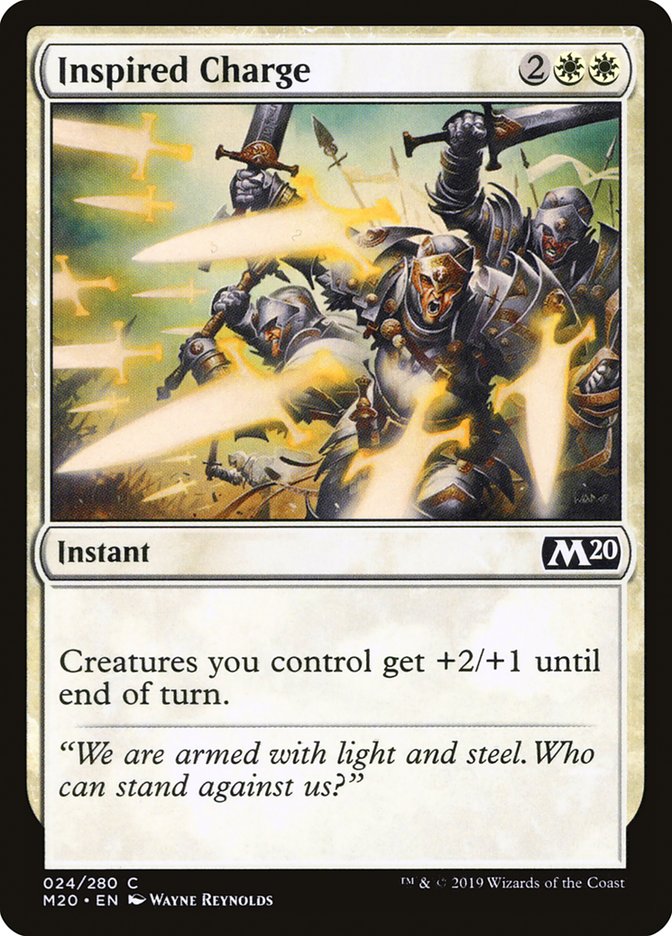
Inspiring Charge, the instant, doesn't have this progressive upside and is way worse in a format without tons of good multiple body cards to leverage the +2 power. While Raise the Alarm and Ferocious Pup exist, they are really mediocre when you don't draw the enhancement effects. This distinction is important, I'm just curving out Moorland Inquisitor into Steadfast Sentry and getting excited to Inspiring Captain and jam in on Turn 4, Turn 5.

As of now, I think Inspiring Captain is the 2nd best White common behind Pacifism. It's worse than the "good removal" tier of commons, but once you start hitting the "solid creatures" section with Audacious Thief, Silverback Shaman, and more I think Captain fits right in with that bunch.

Blue: 


I'm not gonna lie, I'm not really sure what Blue is doing super well in this format. It has the most powerful common in Cloudkin Seer and the Arena infamous Reknown Weaponsmith plus Heart-piecer Bow setup, but the individual Blue commons don't play well on this "every card trades and you want them all to be solid per card rates" axis. Typically in these kind of formats Blue wins by breaking the card parity or having Essence Scatter type universal answers, and it can't really do either that well.

Frilled Sea Serpent at least tries to play on the exchange axis. The 4/6 size is both good against the multiple common 5/4s at the top of other high ends (Silverback Shaman and Fire Elemental) and a bit hard to double block, but importantly this is a card that plays both the aggressive and defensive sides of the late game well. If you are behind, 4/6 is going to block hard. If you are ahead, a 4/6 attacks fine and the unblockable ability threatens to close out.

Why is this important? There isn't a defined control end game in this format if you don't have Scholar of the Ages or Moldervine Reclamation, and sometimes even if you do have those in your deck you don't draw them. Building a defensive deck means you end up in board stalls where no one is advantaged your opponent might just draw kill spell plus flier first. Obviously Frilled Sea Serpent breaks those stalls slowly open, but the plan I described of getting ahead and using it as a way to close the gap on pressure is crucial. If the game plays out such that you can be aggressive, you really want your cards to be able to let you extract the life total value while you can because the format doesn't give a ton of other ways to generate tangible value of any kind.

You can't play too many 6 drops in a Draft deck, but if I had 1-2 Frilled Sea Serpents in a Blue deck I would be reasonably happy about that outcome.

Black: 


Fathom Fleet Cutthroat is the reverse Inspiring Captain. It still has the damage or trade down choice, it's just after the fact and tends to result in attrition rather than beatdown.

One key to this card is that Black has multiple lower cost common creatures your opponents really want to block: Blood Burgler and Audacious Thief. Bladebrand also exists, but your opponent might be OK trading for that if it means you don't develop your battlefield. Black's access to Soul Salvage at common is also extremely important here to both extend the profitability of trading and threaten Fathom Fleet Cutthroat deeper into games just because the card is in your graveyard. Good opponents will play around the card a bit, but there's only so much room to do that. Plus, often if they do play around it the 2/2s I mentioned have already extracted extra value before you play a normal 3/3.

Now is probably a good time to talk about how 3/3 is just a solid body size in this format. Almost nothing below five mana beats a 3/3 in combat, and very few things hit the 6 power threshold so 3/3s threaten profitable double blocks.  '

You might notice a lot of my discussion centers around 2/2s and 3/3s brawling. Heart-Piercer Bow is a real constraining factor on the Arena metagame, and both forcing your opponent to need multiples for it to do anything and not giving them time to find those are huge. Heart-Piercer Bow decks are generally lacking on quality creatures, so really that matchup is almost always the time where you are put to the test about your deck being able to play the aggressor well.

I'm less excited about Fathom Fleet Cutthroat than Inspiring Captain because it is worse in multiples, but it's on the good side of the playable filler line.

Red: 


Fire Elemental has some bad card inertia. It was not great in Dominaria and not great in Core Set 2019.

A couple things changed in Core Set 2020, and now Fire Elemental is solidly in the same good top end filler camp as Frilled Sea Serpent. The biggest and most obvious is the Elemental subtype. There aren't even a ton of Elemental payoffs, but just the interaction with Chandra's Firecat allowing a Turn 4 Fire Elemental is a game changer.

Fire Elemental also layers well with Lavakin Brawler, even ignore the Elemental type upside. While I did talk about how double blocking a 5/4 with 3/3s happens, there are only so many times that can happen because people only have so many 3/3s. 5/4 sizing pushes 2-for-1s on more common double blocks involving 2/2s. Lavakin Brawler into Fire Elemental often means both creatures are 5/4s and you can just push your opponent out of the game with beefy attacks.

The fifth power on Fire Elemental also gives Red a little more range. All the Red removal is size capped, and having some of your general sizing push above Chandra's Outrage's 4 damage can help a Red deck continue to operate through some larger threats or a boosted creature. I like Reduce to Ashes a bit more than everyone else for a similar reason.

As with Frilled Sea Serpent you can't play a ton of five drops, but if my Red deck has 1-2 Fire Elementals there I'm absolutely fine with that.

Green: 


Green gets  a double dip here because these two cards are tied to each other.

Season of Growth would be really bad in a lot of other formats (Eyes Everywhere in Ravnica Allegiance was mediocre). In this format is one of the better green plans. Season of Growth is one of the few cards that actually offers a long term engine, not making your cards better on average but just scrying lands away and giving you more spells over time. The card draw on target is largely a bonus and I wouldn't go out of my way to play a ton of combat tricks to support it. Rabid Bite is the exciting way to trigger that ability, Growth Cycle is not.

But I would play Feral Invocation regardless, and it's presence as another already good common way to draw cards with Season of Growth is a huge upside for that uncommon.

One shot pump spells in Core Set 2020 are rather unexciting. Too often the best spot for them over a game is saving a 2/2 or a 3/3 in combat, and at the end of the game spending 2 mana and a card to conditionally make another replacement level dork is not worth it. The times you get to win a fight of two big things or break open a double block are just rare.

But Feral Invocation is different. When you fire off Feral Invocation in one of these small ball fights you end up with something big that your opponent has to answer. Even if they kill your 4/4 or 5/5 later, you end up having killed their creature on curve and forcing a good removal spell out of their hand while probably getting in another good attack or two.

Season of Growth is as good a first pick as some of the second string removal like Shock, and Feral Invocation is solidly in the good playables camp below that.

Artifact: 


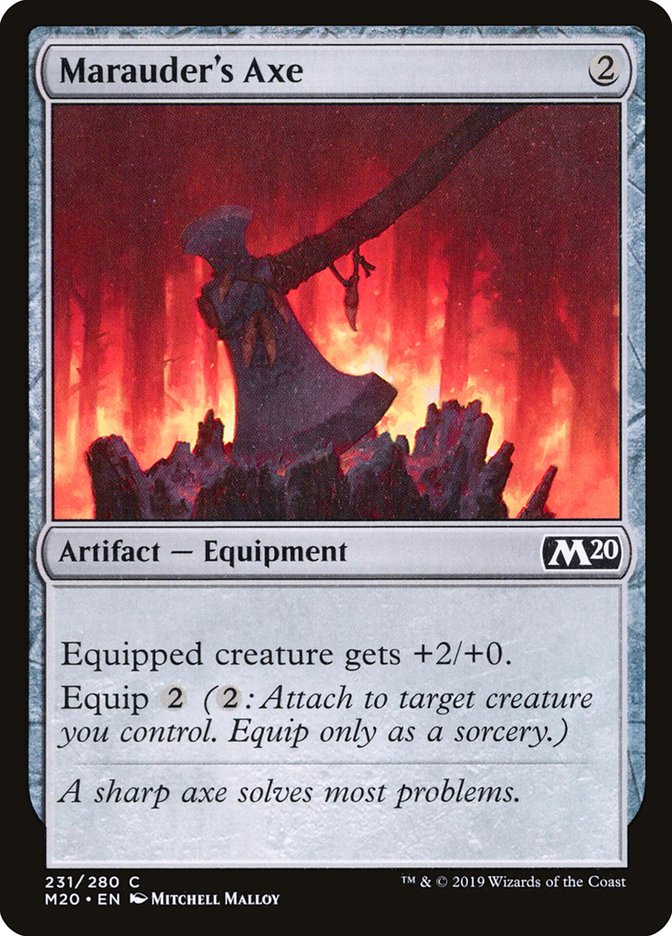
It should be no shock that if my premise is forcing stuff to trade up is good, equipment overperforms in Core Set 2020. Marauder's Axe solidly pushes creatures up a tier and a half, letting 2/2s attack into 3/3s and 5/4s, letting 3/3s break up simple double blocks, and letting fliers clock extremely fast. Red also lets you pull some fun tricks with Goblin Smuggler and moving the Axe around to push through extra unblockable damage.

My Simic, Dimir, and Golgari decks largely aren't trying to play this game of ensuring they can draw a 2/2 on Turn 10 and still attack with it, but anything with White or Red is. There's diminishing returns on multiple equipment since you can't have a Spear pick up a Sword, but I usually want to have 1 Marauder Axe in my White or Red decks.


Thursday, August 15, 2019

How to Draft White in Core Set 2020

White has had a rough time the last couple draft formats. Core Set 2020 started that way, but people are working hard to unlock how the color works. Since the last Arena updates, I've felt fundamentally the most comfortable playing and winning with White.

Lords of Limited this week went through a lot of card specifics and some drafts (If you enjoy playing Draft and Sealed and haven't checked them out, Lords of Limited is an amazing podcast), but as a companion piece here's the not so easy secret on how to think about the format to win with White.

White in Core Set 2020 is traditional scrappy aggro, but it scraps with the best of them in this format.


What Is the Exploit?


The individual White cards in Core Set 2020 aren't good. Often they don't directly boost each other in obvious ways. What's the plan?


The two drops in Core Set 2020 are uninspiring. They largely just exist to get into combat and don't scale up well to fight larger creatures when you draw then on Turn 8.

As a result, people don't play these cards. They also are lighter on random three cost bodies, because the draw of Sage's Row Denizen is blocking two drops people don't really win games with.

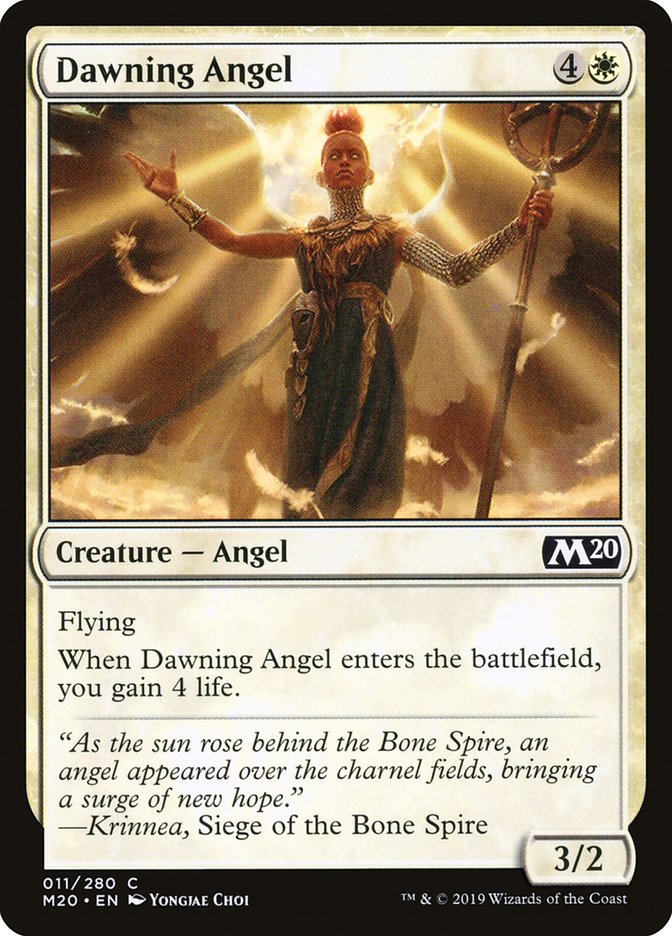
While the four and five drops of Core Set 2020 are good, they aren't cards that massively swing board parity. Even Dawning Angel, which should be a strong four life buffer to catch you up, has two toughness and trades for a two drop.

This the exploit. White's spot in Core Set 2020 is as the color best at making a two drop matter on Turn 5 or Turn 6. White aims to get ahead, push in damage, then keep forcing favorable exchanges where it pushes in even more damage. Your second color answers how you plan on bridging the gap from dealing ten damage to dealing twenty damage.


The Mental Framework


To build a successful White deck in Core Set 2020 draft, think about your cards and plays in these ways.


  • How long does this card keep profitably attacking without help? Is it uniquely doing this?
  • What specific (or generalized) cards are going to stop me from profitably attacking in the future?
  • If I expend something to handle one of these cards, am I getting a tangible extra advantage? Am I dealing damage as a result, or significantly mitigating their future ability to handle attacks, or best yet not actually expending things of value to do this?

Some card specific applications of this theory.


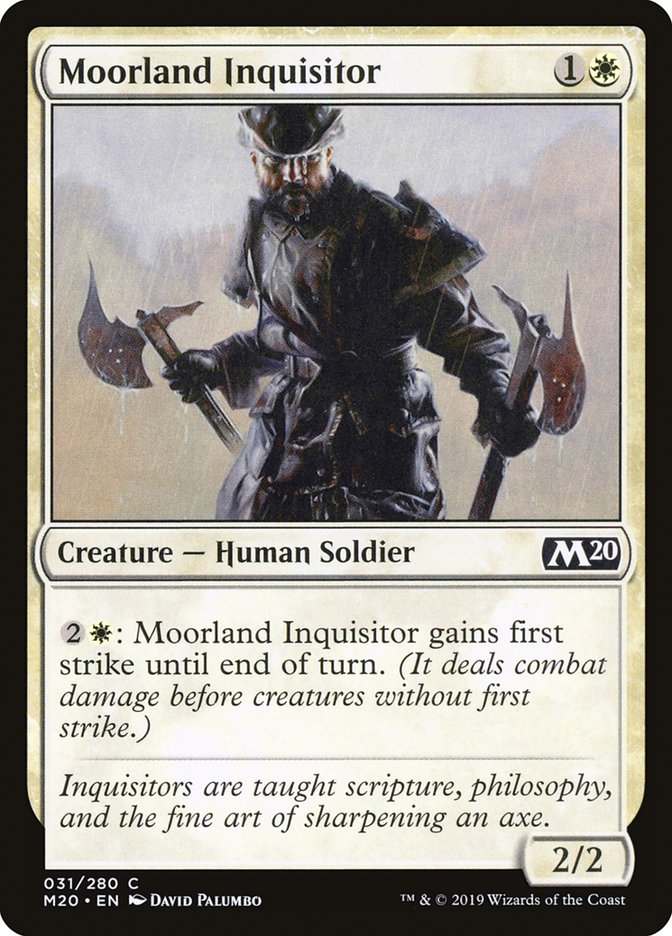
Moorland Inquisitor is a clutch piece of these combat puzzles. Your opponent has to put multiple creatures or a bigger one in front of it to stop profitable attacks due to first strike, allowing you to leverage a pump spell. That combat trick often ends up profitable because you keep Inquisitor through first strike. Once you clear multiple things or a large threat, that opens up a lot of room for your other cards to start providing value again.


I'm evaluating Moorland Inquisitor in the C+ range, aiming to take it in the 5th to 9th range. The fact it often wheels on Arena is a big deal when White is open, and I'm actively looking to fill my deck with cards like this.


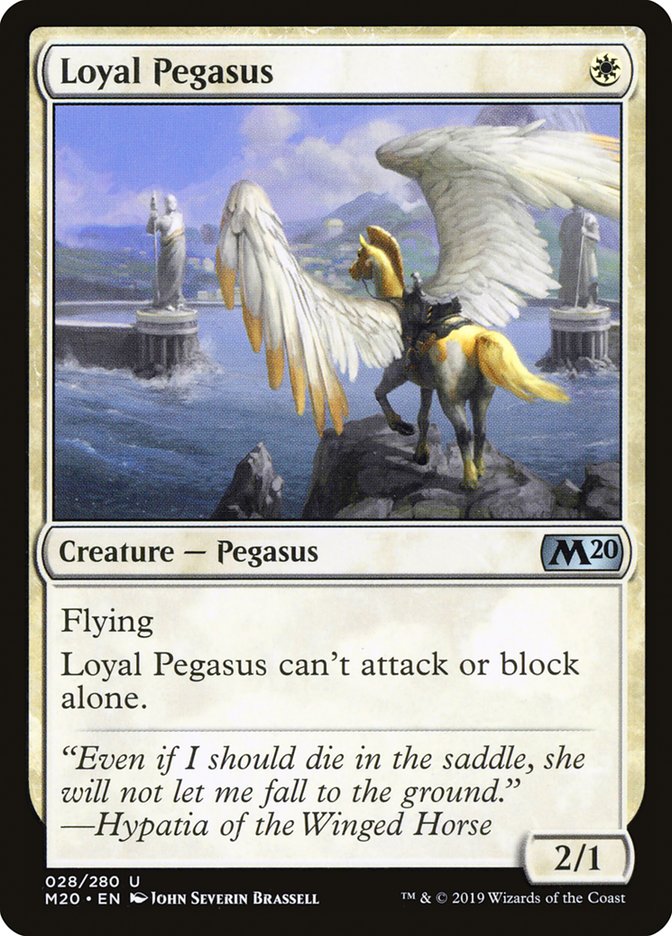
Loyal Pegasus is another poster child of this archetype. One mana for a real sized body that often requires unique blockers to stop and works later on represents a large amount of damage. The weeks where Arena let you wheel these were good times for White drafters, I wouldn't count on that happening more.


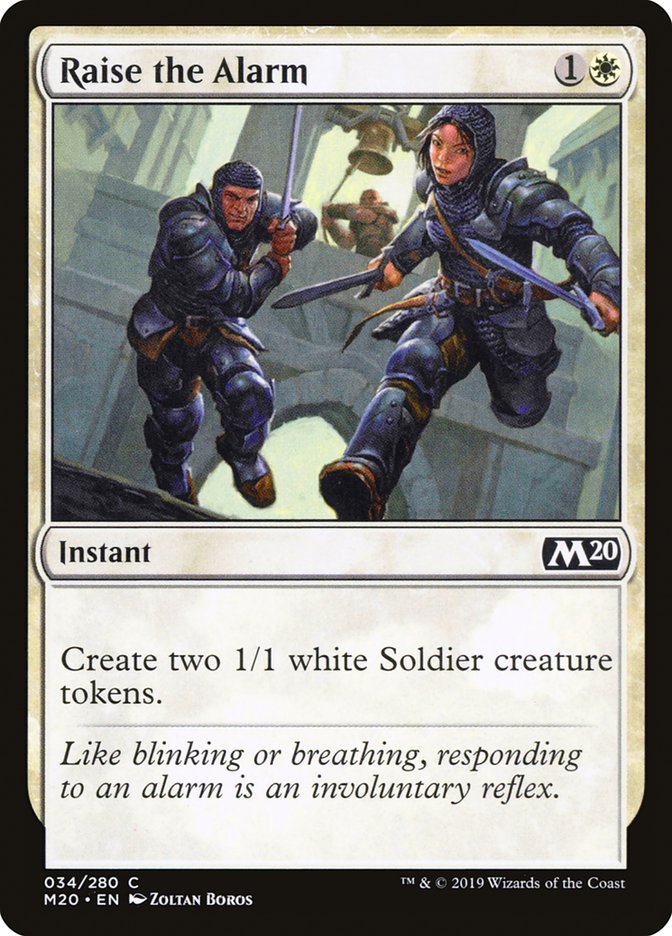
Raise the Alarm doesn't really ever attack profitably on its own, and I think the card is a bit overrated as a result. You don't get ahead for any reasonable span of time just with Raise the Alarm. The goal of this card is entirely to leverage other good cards in your deck that amplify the power of individual creatures.

Due to bot priorities I value this slightly higher than Moorland Inquisitor, but it requires more work than Inquisitor to make actively good. I wouldn't be excited just because I had a bunch of Raise the Alarms, I would if I have a bunch of ways to use them.


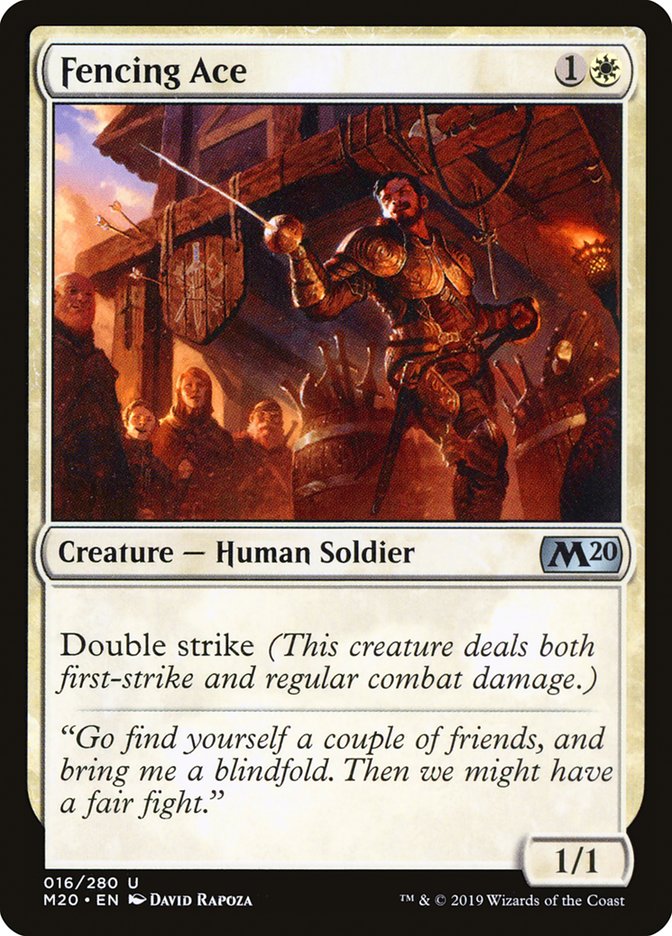
Fencing Ace is in a similar category of low impact but high leverage, but with less synergies and more risk.


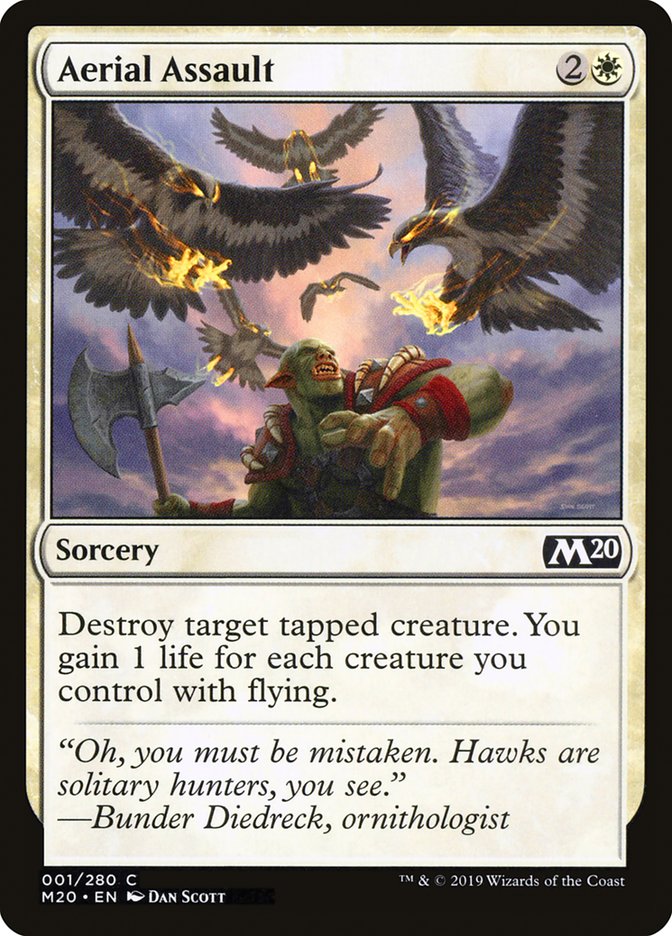
Most White decks are proactive. Aerial Assault is very reactive. Unless you are Azorius Fliers often it is not great, and often gets cast once you are already behind to bring you from "losing" to "unable to win but not actively dying". I'll play Aerial Assault but it is cuttable and an incidental pickup in the draft portion.


Equipment is extremely important to this archetype's game plan. All this leveraging smaller creatures, generating spots where you clear a bigger stopping card at low investment? That's Marauder's Axe. There's still cost and lack of independent effect issues, but I want the first Axe and would probably play two.

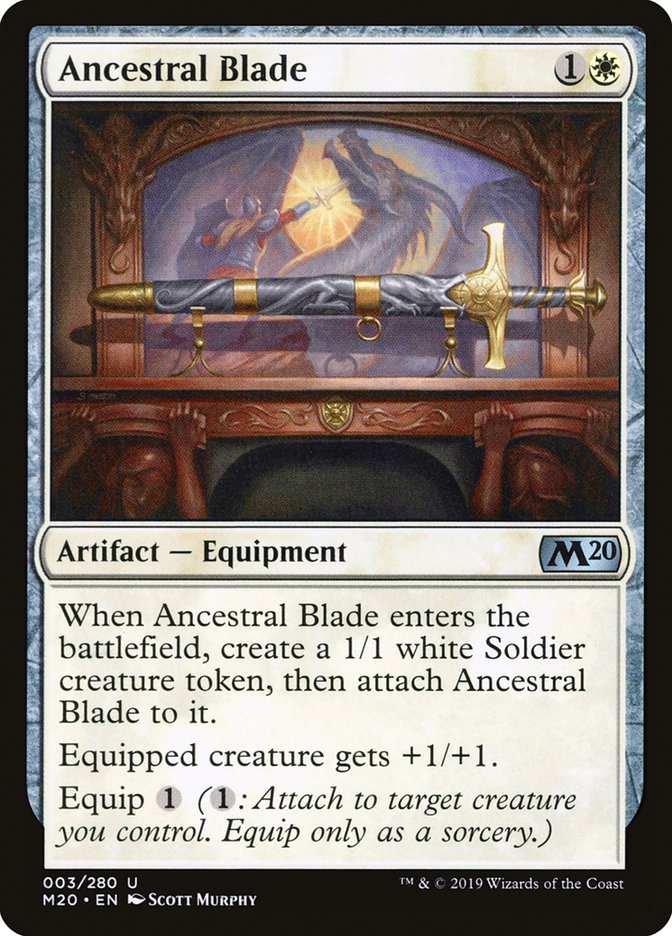
I have Ancestral Blade as the best White non-rare. It just checks all the boxes. Gets me ahead early and lets me set up profitable attacks later at no cost. I have it on par with some of the best commons, somewhere in the mix between Murder and Rabid Bite.


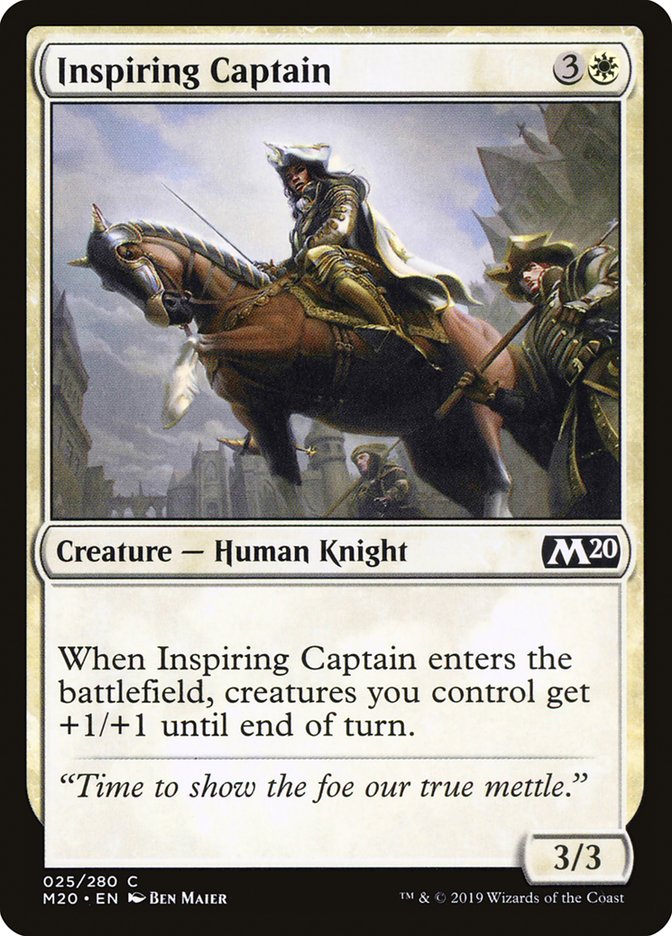
Inspiring Captain is another great low cost way to push through damage. A common early pattern is your opponent having a 2/2 or 3/3 to your multiple early creatures. Playing Inspiring Captain nets you immediate damage and keeps you progressively ahead on board for the next turn. I'm happy to play multiple copies of this card and its in a similar C+ position to the two drops I mentioned.


I also like Inspiring Charge, but not as an all in card. I'm not aiming to build a deck where my route to victory is make ten idiots, smush sideways, and +2/+1 the squad. You can't get that far ahead on bodies with these cards without already winning.

Inspiring Charge is good when you send multiple things into their multiple things at close to parity, and suddenly all their blocks are terrible or cost a lot of life from your unblocked attackers. I'm not aggressively trying to play multiples of this card as it is a four mana trick that gets better when you draw more bodies and less other tricks, but the first is fine and the second isn't offensive.


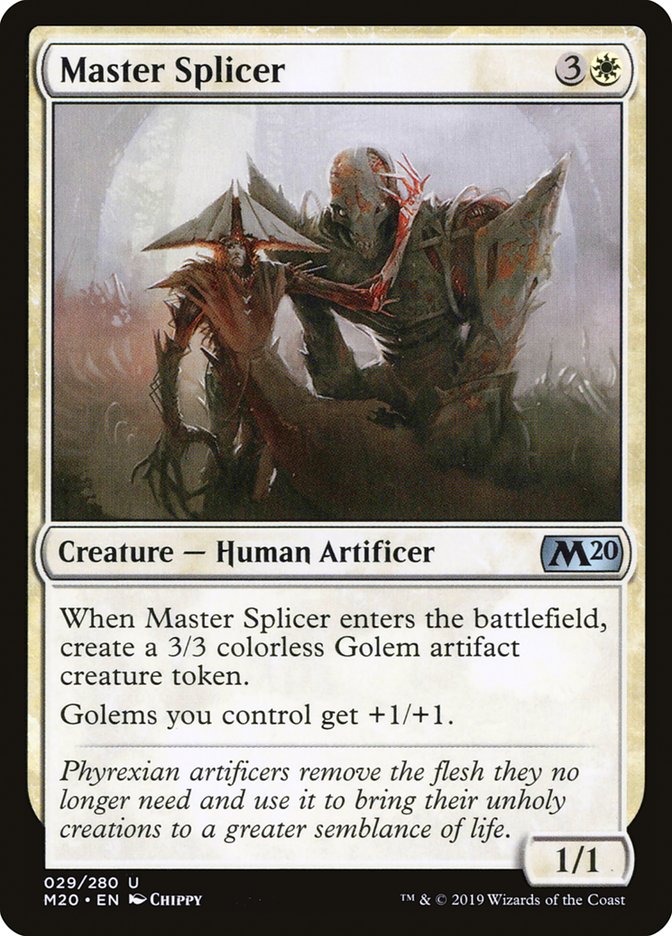
Master Splicer is a good card. But it isn't uniquely good.

There aren't incidental flicker effects, Unsummon your own Splicer is just build a 5 mana 4/4. A 4/4 isn't massive for the format. The spare 1/1 doesn't do much.

I'm taking Master Splicer highly, but the delta between it as your four drop and Inspiring Captain is inches not miles. If you want a letter, its B or B- where you might first pick it but aren't attached to it. I think Pacifism just might be better as its less replaceable.


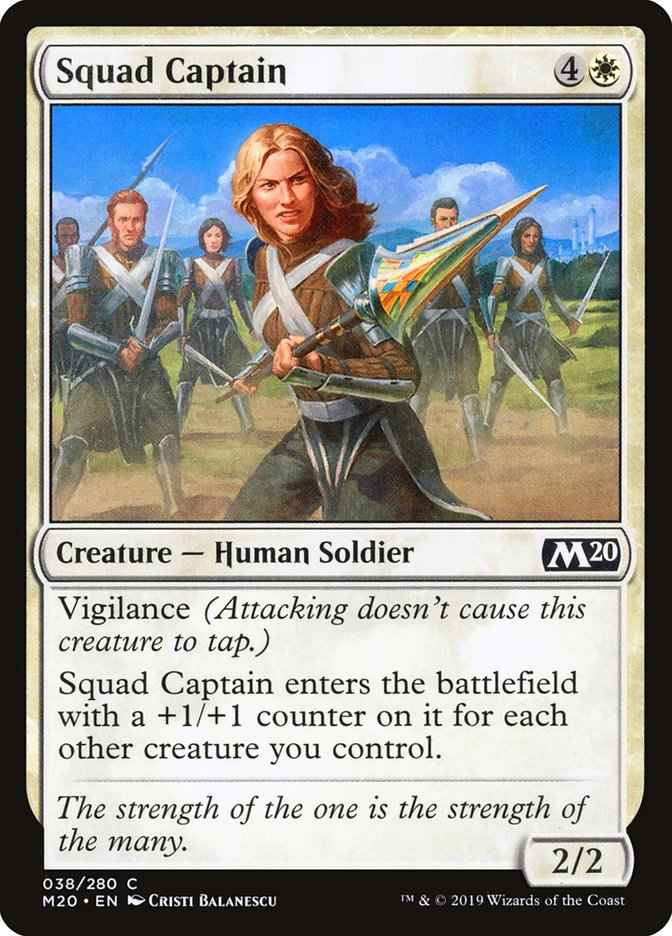
Squad Captain scaling up to larger sizes is an example of a unique effect. A 7/7 or 8/8 wins games other cards don't. The card has downsides of costing five and doing nothing by itself, so I don't take it highly, but I consider this a solid C-level card I want to be casting.


There's a lot of combat tricks in Core Set 2020. On the subject of Pacifism, sometimes you have a thing pop up with assertive decks where removal is lower priority than some creatures because a combat trick you get 10th pick is good enough.

I don't think that's the case in Core Set 2020. The immediate "you aren't blocking" of Pacifism or another kill spell is extremely relevant damage. The tricks aren't much more efficient than removal, with both in the two or three cost bin where double spelling is reasonable on Turn 5 but not on Turn 3 or Turn 4. Outside of Growth Cycle, most only grant two toughness which might still be a trade for a larger creature.

I like green's Feral Invocation since "wasting" that card on a lower exchange leaves a lasting tangible advantage, but other combat tricks are largely replaceable last slot spells. Even the best are in the filler tiers of pick orders.


While I think most white decks fall into this kind of min-maxing combat style, I want to note I think heavy Black Orzhov can pull off a completely different approach.

Black is great at coming out ahead on actual card-for-card exchanges in Core Set 2020. Not on board, but in eventual raw advantage. The issue is if it misses a beat it doesn't have a ton of recovery tools. Dawning Angel is almost exactly what it needs. You don't care that the 3/2 body trades down, just that it trades and buffers your life to give you time for future plays and trades.

I think Dawning Angel is fine in aggro White, but it really shines in Orzhov Control.


The Hidden Upside


The thing I like the most about White in Core Set 2020 is it makes you play good Magic and rewards you for it.

There's a common trap players can fall into where they play a deck that gives them the ability to make choices and feel smart for choosing the right options. Often they are just spewing off win rate relative to a deck that lets them make fewer decisions, because the low decision deck just wins without thinking too hard.

Core Set 2020 isn't that format, especially on Arena. If anything, I've found the flexibility of White decks to be amazing in breaking open games where raw card power doesn't line up your way. Core Set 2020 is a Core Set, with lots of equal cards and some that are just more equal than the rest (usually that's the rares).

When my opponent just has more high power cards than me, I don't want to hope I draw more good cards somehow like I have felt my Simic decks do, I want to already be asking how to make my cards line up against more powerful things like my White decks.

White is the feel smart color in Core Set 2020. It's the work for your wins color. And in the end, if you line stuff up right, it's a pretty good actually get the results color.

Saturday, June 29, 2019

The Ari Lax Travel Scale

If you have followed me on Twitter for any amount of time, you may be aware that I’m prone to travel… adventures. Or mishaps. I like to think that most of them weren’t my fault, but it keeps happening to me and I have to wonder if I really am a subtle cause or indirectly setting myself up for them.

If you follow Magic design you may be familiar with the Storm Scale. This is a retrospective grade Mark Rosewater likes to apply to mechanics to show how likely they are to return in Magic.

Today, I would like to introduce the Ari Lax Travel Scale. From 0 to 10, how much does the travel mishap impact my life?

0 - We get there at or ahead of time, without any issues.


Believe it or not, this does happen to me sometimes.

1 - You get there with maybe a minor delay.


You leave Boston in rush hour post-work traffic. 

You drive from DC to Pittsburgh and a wild Breezewood appears in the middle.

Your plane takes off, lands, but you are row 37 and wait to get out.

This covers most Magic trips. It’s the “evergreen” state of travel.

2 - Something happens, but just to someone else you know. At most they had a card or two for you.


In the 2013-2014 Pro Season (Theros Block in Magic time), Conley Woods was on some kind of roll. He played a really wild selection of decks at events, highlighted by Pro Tour choices of 3 Birthing Pod Melira Pod in Modern, Abzan Enchantress with no Elspeth, Sun’s Champion or Thoughtseize in Theros block, and Necromancer’s Stockpile Golgari in Standard. 

This wasn’t limited to Pro Tours, his Grand Prix decks were all swings for the fences. One of these times, I felt he had struck gold. This was Born of the Gods Standard, a format of Mono-Black Pack Rat, Mono-Blue Devotion, and Esper Control, and he wanted to play Golgari Dredge with Nighthowler.

Somehow, his flight from Denver just failed to take off. I made it to the event, played his deck, and lost playing for Top 8 with the big Conley brew hit of the year.

That’s just some bad timing.

3 - Something happens to me, but it’s largely an oddity or inconvenience


I look up at the ceiling of the Ted William tunnel, pictured above for non-Bostonians. I can see it because I’m outside of any moving vehicle, walking down the service side rail with the other thirty people that were on my bus.

Well, the broken down bus. We were the problem holding everyone up in horrific Boston traffic, and now the new bus taking us to Logan airport is 20 feet ahead of us loading people in the middle of traffic in the tunnel. 

At least I had 4G service the whole time and left early for the airport. Unlike the elevator incident (a 4.5 on the scale) I don’t think I had the foresight to live tweet the experience.

4 - Something happens to me, it’s a moderate inconvenience, but doesn’t really change my plans. Or it’s a slight inconvenience, but I’m definitely at fault


This is one of the places on the scale where story equity peaks.

PT Hour of Devastation 2017 in Kyoto. I’m flying Baltimore to Atlanta to Seoul to Kyoto. My Baltimore flight gets delayed, putting my connection time through Atlanta in the 20 minute range from landing to boarding closing.

I sprint across the Atlanta airport, make it from B terminal to my international flight in about 12 minutes (Google says this is a mile with human obstacles in the way), and am insanely glad I checked my main bag. 

Oh wait, my checked bag needed to make that trip. Will I even have clothes once I land in Kyoto? Oh wait, my teammates are saying that I read the train schedule wrong and once I land in Kyoto I have 50 minutes to deboard, clear customs with said potential bag, buy a train ticket, and get on the last train to Kyoto or I’ll be stuck in the airport for seven hours. 

I land, and Pierre Dagen randomly arrives at the same time. My bag magically shows up, there’s apparently a bus that is not only faster but picks up later than the train, and I make it to Kyoto. 

But wait, there’s more, and here is where I’m at fault for my own.... experiences.

My behind the times travel quirk is that I never set up international cell access, which means I have no navigation. I have the address of the AirBNB I’m staying at, but it’s English characters with what I can only assume is not enough kanji to be the full address. From my prior experience many Japanese people can read English but not speak it, so I should be fine right? I have a static map of the area on my phone with a GPS pin for me (today’s lesson: GPS is a one way signal and doesn’t require data) but no GPS pin for my destination, just a broad idea of the area I need to go.

My late night cab driver doesn’t read English characters, and I’m appropriately punished for being a stupidly presumptive American. He doesn’t have a GPS, just a digital map. I point him to around right spot, and we head off. He gets me within a couple blocks according to my GPS and approximate knowledge after getting a bit lost, hands part of the fare back to me because he got lost, and I leave.

But wait, it’s not over, and I’m still at fault for this part. I’m outside in the neighborhood, I have a broad idea of where I’m going, but there aren’t really addresses. Or street signs, not that I could read them. And I know the place is down some dead end small street without a clear marking somewhere near the river. 

I do have the Wifi network name and the password though, and my phone has plenty of power. I wander in the right direction, playing high tech Marco Polo, and eventually find the right place via Wifi signal strength navigation. Overall, it takes me about 20 minutes extra.

I still haven’t ever set up international data on a trip.

5 - Something happens to me, I get there on time, but it’s a significant change in schedule


Flying to Grand Prix Los Angeles last August, I scheduled my flight out of Dulles in around 4pm with a short connection in Denver. 

There’s an almost daily thunderstorm in the DC area, that hits the Dulles area around 4pm. Maybe I should have thought this through better.

We land in Denver, I clearly miss my flight, and I check the board for options. There's another flight leaving for LA in 45 minutes, but apparently United just can't put me on it unless I talk to the specific airport customer service agents. Not the phone line, not the gate agent, not their online weather rebooking, just one woman at one desk with 300 other people in line from other flights. After 20 minutes, I accept I'm stuck with the 6am option tomorrow.

Some luck is on my side, and I end up with a bed despite the vast majority of Denver just going yo the GP. Matt Nass was in town due to having hit Platinum, Sam Pardee was flying to the Grand Prix anyways, and that meant there was an open bed to mise. I get there, sleep four hours, go back to the airport for a 6am flight, and get to LA. Without a built deck, obviously.

When I land, I'm greeted with the best possible outcome. The best Jewish deli in the area opens at 7am, it is now 7:30am, and it is directly between us and getting to the site on time to get my missing cards.

Somehow even the messes work out OK in the end.

The rest of the event…. Let’s not talk about that. We are grading travel beats here, not losses due to Magic cheats.

6 - My plans are jeopardized, but largely due to events that don’t physically impact me


Grand Prix Columbus 2018. I’m teaming with Tommy “stainerson” Ashton and Adam “awinnarisyou” Ragsdale.

Tommy is from DC. I’m from DC. Adam is from Toronto. It’s summer, not winter. Keep this all in mind.

I drive the six hours from DC to Columbus because I can take a half Friday. I make it to Columbus on time, order a pizza, and chill in our team Airbnb. Tommy’s flight gets delayed from 8pm to 9pm, then 10pm, then 11pm. Fortunately Jake Mondello is just there to hang out, so I have a backup third on deck in case things go wrong.

Just before I pass out, Adam Ragsdale mentions his late flight out of Canada is delayed 15 minutes.

I wake up at 4am, probably because I ate a whole pizza 8 hours before, to a slew of messages. Tommy isn’t in Columbus, his flight was cancelled because the plane broke, good luck friends. Adam isn’t in Columbus, his flight was cancelled because the plane broke, and they almost locked him in the Toronto airport. 

Because this is still fairly routine nonsense, I shrug and try to assemble a team. Jake is probably asleep, but probably in. I post on the usual circuits, head over to the site when it opens, and decide to ask everyone I know from the area if they have a free agent, and call it quits if I don’t find someone by 9am.

The first local I find to ask is Ben Weinburg at about 8:45am. He says he saw Riley Curran on Discord playing League of Legends at 7am and knows he had no plans to show up. He messages Riley, who hasn’t read any of the Dominaria cards that were just released that weekend but will gladly show up as soon as he can be ready, and I lock it in. 

Jake responds at 8:57 saying he just saw the message but will be there. I sit down for deck build as a team of one. A judge takes pity on me and helps verify a pool with me, and Jake shows up about 10 minutes into deck build as I’ve laid out the playables. Riley shows up 30 minutes later, we have a deck in front of him, he reads all the cards, and it’s go time.

We lose playing for Day 2. Riley was given one rare, a Dread Shade, and had the best record on the team. 

For a one player team as of 15 minutes before the event started, I’ll take it.

7 - My plans are jeopardized, and there was a real chance everything would fall apart


Grand Prix Providence 2011. Notably the Mental Misstep Grand Prix, but that’s not today’s story.

Two cars are meeting up at RIW Hobbies in Michigan and driving down together-ish. I just drove my car down to DC for a SCG Open (a trip that was a solid 4 on the scale with a splash of 8), so it’s someone else’s turn to drive. Their car revs a little hard, but we get on the highway to RIW fine. Before we begin our 14 hour drive one of the four people from the other car runs over, yells “kids in the back!”, and hops in to discuss Storm for the next half day.

We get about five hours into the trip onto I-80 in Ohio. It’s a toll highway with few exits and we are just churning along. Traffic merges to one lane for construction, it starts raining, and now its stop and go. And stop and go, and stop……

No go. 

We get out of the car, with the entire interstate stuck behind us. A neutral push starts it up, but the next time we stop we don’t get going again. As we push the car off the road, we actually see the other Michigan car driving with us go past, with Michael Jacob’s incredulous stare prominently in the passenger seat. “These idiots, I can’t believe someone would just break down in a one lane highway”. 

We convince them (well, not Mike, but the other two guys) to wait at the next rest stop for us as a tow truck arrives. A tow truck with one passenger seat, but a very courteous driver who doesn’t want to leave us in the rain off a highway five miles from an exit. We are told “I’m not supposed to do this, buckle up” and we remain in the dead car as its raised onto the flat bed. Going 70 miles an hour in a turned off car a couple feet up on a flatbed feels as weird as it sounds.

We get to the rest stop, and a numbers problem ensues. There are five spots in the other car. There are three of them, and four of us. The owner of the defunct car opts to wait in Ohio to save money for a new transmission. That leaves two slots, three people, and one solution. 

We game. I’m safe first, and I pull two cards from a Pauper Cube saying one person will have their ride Cancel-led. The first person flips their card up, it’s a 1UU instant, its Ca….psize. The second person, who was the one who arbitrarily swapped cars to begin with, is left in Ohio with a Cancel and the promise of “another car from Michigan is coming in seven hours”. Thankfully Twitter existed, and the internet found him another ride significantly faster.

So yes, I have randomly determined if who was going to be stuck in Ohio once. Once you play for stakes that high, most other gambles aren’t that big a deal.


8 - My plans are jeopardized, and there’s definitely additional risks involved


Grand Prix Montreal 2014, early March.

In October, the drive from Boston to Montreal is basically the stereotypical idyllic Northeastern fall excursion.

From November to close to May it's a frozen hellscape.

There are five of us in Jackie Lee's Prius. We are almost windblown off the road in the Canadian tundra on the way there, right in front of this church with weird, spiky, blood red crucifixes in front of it. Canadians have to be proactively friendly, otherwise the country would likely descend into full on Donner party every winter.

On the way home, we safely make it back to America but it isn't like Vermont is much better. It's about 17 degrees F(reedom units) and icy as hell.

This time when the car engine goes out we are moving, so we can coast off the road instead of pushing.

This time I ask if the tow truck has seating for five before it shows up, as the alternative might be freezing to death.

Of course, it's midnight in the middle of nowhere and the tow truck will be at least an hour. And every person that sees us pulls over to offer help. And each time we open the window, we lose heat.

Fortunately the tow truck is on time while car is still merely brisk and not freezing, actually has seating for five, and is willing to give us a ride back to Boston for the same cost as other transit. We get home an hour or two later than expected, and my bed is really warm that night.

9 - Wait WHAT? You still got there?


“Excuse me ladies and gentlemen, you may have smelled that. There’s a bit of an electrical fire somewhere. We aren’t quite sure where, and it’s not causing any issues yet, but we are going to take the plane in juuuust to be safe”.

That’s not really a paraphrase. When your pilot says something like that, you tend to remember it almost word-for-word.

At least this was on the leg of the flight to Hawaii that was over land, as opposed to the Pacific Ocean.

Specifically, that land was Iowa, and not Des Moines. Waterloo, Iowa technically has an airport you can land a 747 at, but not enough seats for everyone once they get off the plane that is still ON FIRE SOMEWHERE BUT WE DON’T KNOW WHERE.

The mayor of Waterloo was on it though, with free pizza and a bus to the casino, which made things a lot better as we waited for a new, significantly less on fire plane to show up.

10 - I miss the event, or the issue is seriously traumatic


I have yet to experience a 10 on this scale. I really don’t want to. 

The closest I’ve come is booking Spirit a red eye flight. I wisely skipped that entire event for unrelated reasons.


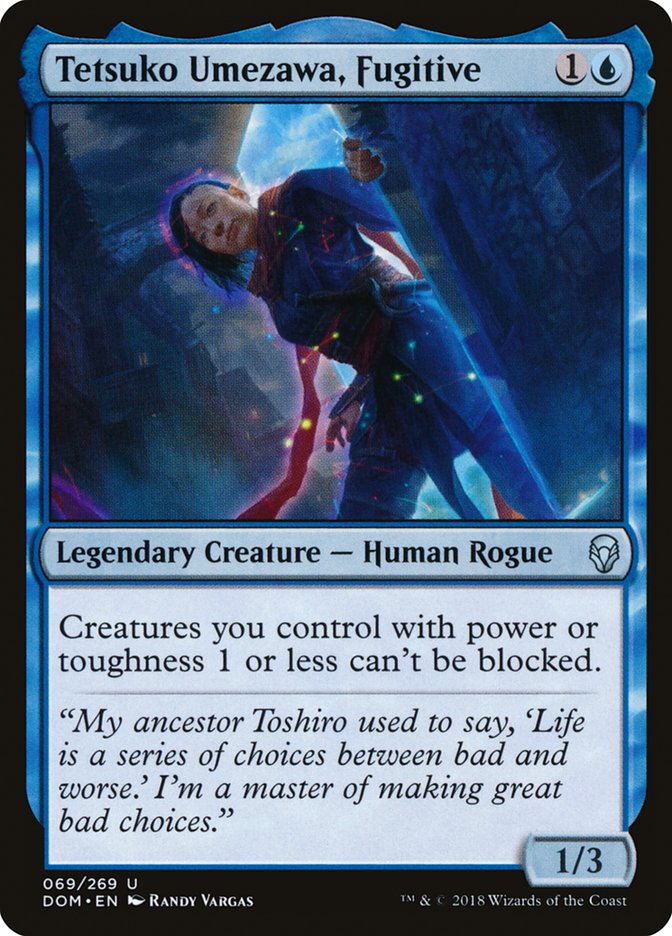
To quote a recent flavor text favorite on mine: “I’m a master of making great bad choices”.