Tuesday, May 28, 2019

My Five Rules for WAR Draft

Despite the first reactions to rares and planeswalkers dominating games, War of the Spark Draft can be an intricate format. Just drafting cards in colors often leads to really bad decks, even if you have a broken rare or two.

Ok, those decks still win a lot because the rares are really broken, but they could win even more if they were drafted and built right.

After a month of playing the format, here’s how to frame the small decisions of the format to maximize your best cards and minimize theirs.

(In the interest of keeping the main flow together, I’ve moved some of the tangents to endnotes. If you don’t mind a flow break, feel free to skip ahead and read those where they are noted.)

Rule #1: Do Fucked Up Things


Family friendly writing was broken on purpose. I want to emphasize this hard.

The way to win in War of the Spark draft is do something soul crushingly powerful, typically a cascading advantage they can't match by just casting creatures. A rare, a planeswalker, recurring that planeswalker, proliferate starts in white and green, various spell churning synergies in blue and red, and so on.


The only exception is black decks, and "kill all your relevant cards with barely conditional removal" honestly is its own brand of this.

Note that while some of this implies a synergy based format, I'll remind you that a lot of these "synergies" are just "don't be getting crushed so I can cast my one card win" and less cumulative interactions. Honestly a lot of the synergy stuff in the format is underwhelming because it isn't broken and game ending. Getting a card off Spark Reaper sacrificing Grim Initiate is nice, but doing that a bunch still won't match the good things that do more for less mana and card investment.

(End Note 1: Why I Don’t Like WAR Draft)

Rule #2: Traction is Key


Everyone has already said this, so let's keep it quick.


The easiest way to "go off" in War of the Spark draft is activate an uncommon planeswalker twice. 

This is the only broken thing your Tier 2 cards can broadly interact with.

You want basically all your filler to put you in position to attack an uncommon planeswalker and prevent that second activation. All the lower power cards that don't do that are really close to unplayable unless….

Rule #3: Build to Leverage Your More Specific Unbeatable Cards


More unbeatable setups in your deck is a good thing. If all the non-unbeatable cards tend to get washed out (outside of their ability to brawl over planeswalkers), then try hard to use those slots to make more of your cards potentially unbeatable.

This is kinda just "build around your best cards", except only if those cards are things that runaway with games and in ways that make them do exactly that.


The obvious example of this is Mowu, Loyal Companion. If you make this a 5/5 or 7/7 vigilance trample, you almost always win. Your filler creatures once you have Mowu lean more towards Iron Bully than Vivien's Grizzly, spells towards Courage in Crisis over Bonds of Flourishing, and so on. What other cards tie to this? Obviously the Selesnya Proliferate deck, but also in green-red Courage in Crisis is great with Spellgorger Weird making Mowu a solid fit in some of those decks.


A trickier example? Trusted Pegasus is a driving reason to play combat tricks.

Combat tricks are really bad in this format because they aren’t great traction. The fact that they don’t unconditionally advance your board state makes them bad when defending your planeswalkers, and when attacking their good planeswalkers they don’t stop a block. You attack, they block, you trick, you traded one card for a card, and they get to activate again for more value and just drop another doofus, you end up behind.

But what if you minimize the number of creatures they can block with? When they block and you Giant Growth a Trusted Pegasus, are they really that likely to produce another flier? They already took a hit from your other attacker, how many more of those can they take before dying? What if your trick was Battlefield Promotion and now your 3/3 Pegasus outsizes the random 2/3 fliers? 


Large numbers of Raging Kronch and just being a deck full of 4/3 and 4/4 attackers is another similar spot. They can probably try to trade once for a 4/3, or produce one Ashiok’s Skulker to block, but the second time is much harder if Giant Growth got involved.


Another example: If your planeswalkers are three drops that don’t protect themselves like Narset and Davriel you want to have cheaper creatures to defend them, but if they are five drops like Jaya or Ob Nixilis your three and four drops matter more to defend against the creatures you can expect to be hanging around then.

Remember, the focus here is game ending synergies, not small advantages. Rescuer Sphinx plus Guild Globe isn't that important. Thunder Drake plus Contentious Plan more likely is.

Rule #4: Pick Orders Are Flexible


I’m a bit of a stickler for pick orders these days, and think a good pick order is super important for navigating the first pack of a draft. I really want to have a strong idea of the relative power of every card, so that when I am faced with a pick I have the closest thing possible to a discrete value of each card.

I wouldn’t say War of the Spark throws that out of the window, but it matters less.

I’m still very strict about taking distinctly better cards. If my first two picks are blue and I see Pollenbright Druid versus Sky Theater Strix, I’m taking the B-minus Druid over the C-level Strix. 

But when it comes to stuff like Ob Nixilis’ Cruelty versus Prison Realm, Bloom Hulk versus Spellgorger Weird, Callous Dismissal versus Law-Mage Enforcer, I don’t really care enough to figure it out. Normally I would make sure all of these are “close but clear”, but WAR draft makes them swing too much to matter.


A big part of this are the previously mentioned broken rares and planeswalkers. There are around 20-30 cards so impactful that biasing your deck to play them overrides taking slightly better cards. Probably more, because even a good uncommon planeswalker is so high impact on a game that it pulls me to draft that color.

So even if I think Spellgorger Weird is better than Bloom Hulk without context, if I first picked Nissa or even just Vraska I’m probably taking the 4/4. For a similar reference, in Dominaria if I first pick an Untamed Kavu I’m still second picking Academy Journeymage over Baloth Gorger or some similar equivalency, because there are half or a third as many cards that have that level of forcing payoff.

Another big part of this is that there’s such a huge power level disparity between color pairs, especially once you are partially married to an early rare or planeswalker. Usually I’m among the most open ended drafters, willing to draft whatever if it’s open, but this format that just isn’t the case. You actively need a reason to draft most of the white archetypes, black-white is super corner case reliant on large numbers of rares or planeswalkers.

There’s even a huge disparity in the quality of a bunch of other archetypes depending on which color you are based in. 


For example, green-red as a green-base assertive creature deck or ramp deck has been unimpressive, but as a red-based spells deck has been really nice. Or black-green as a green-base creature deck compared to a green-base ramp deck or black-based control deck, and so on. 

(End Note #2: WAR (Sub)Archetype Ranking)

So if you are faced with a second pick Callous Dismissal versus Law-Rune Enforcer and your first pick was Angrath, Captain of Chaos I’m slamming Callous Dismissal as white-black and white-red are two of those sub-par color comboes. But if my first pick was Vivien, Champion of the Wilds I might just take Law-Rune Enforcer because green-white creature works out better on average than green-blue creatures/tempo.

Also, there’s the next rule…..

Rule #5: All Things Being Equal, Start Mono Color In The Draft


I’ve talked a lot about broken rares. You want the chance to open a broken rare pack two and take it, and you want to lose the least prior investment possible to do this. The easiest way to do this is just not have invested a lot in a second color.

So imagine a scenario of Callous Dismissal versus Spellgorger Weird. If you first picked Kasmina, or if you first picked Jaya, you should just take the card that lines up with that color. Callous Dismissal is slightly worse than Spellgorger Weird, but they are in the same ballpark. 

Again, I’m not justifying drastic deviations here. If it’s Spellgorger Weird versus Jace’s Triumph, I’m taking the Weird regardless of whether my first pick was Kefnet. But if the pick is remotely close without context, it becomes real easy if you can stay in line with prior picks. 

I do think this plan works best for the Grixis colors compared to Selesnya ones. They are just way more self consistent as you go down the card list. 

If you just take all the red commons and uncommons, they tell a story of bulky aggro with a higher than average spell count and often some fodder to sacrifice. 

The black cards tell a story of a deck really able to control the game by answering anything, with a few ways to end up with value so your large number of 1-for-1s ends up with you ahead and some evasion to manage planeswalkers that sneak through.

The blue cards, whatever. It’s just what blue always does. The cards all look like they might do nothing, then you play games and every blue deck is always up a million cards and answers all the things and it was never really close

White though? Trusted Pegasus, white’s second best common, is largely Wind Drake in 40% of white decks. Divine Arrow is in a similar space, Makeshift Battalion ranges from solid in the right aggro deck to unplayable even in another aggro deck, it’s just a mess.

Green? I can just point to Bloom Hulk versus Centaur Nurturer. 

Not to say that I won’t stay mono-color in green or white, just that I’ll pay more attention to if the card I’m picking is good in the abstract or still good in context of my prior picks. If my first three picks are Vivien, Mowu, Band Together a Centaur Nurturer isn’t really staying strongly “on color”.

There's a lot more to dive into in War of the Spark draft that really gets into the card-by-card weeds, and honestly almost all of it can be erased if you have to face the worst case scenario cards. But if you follow these rules you have the best chance of overcoming some of the absurd things that regularly happen in this format.


End Note 1: Why I Don’t Like WAR Draft


The synergies all being super charged and fairly cascading is where I struggle to enjoy War of the Spark draft, because these strategies don't interact with each other in interesting ways. There's a lot of snowball games, with planeswalkers that swing from terrible when behind to unbeatable if stable or just someone turboing out 5/5s. It's to easy for most of the cards in a game to only matter in context of the scramble to position a card that suddenly blanks all of their cards. This is dynamic, but in a horrible way.

It's almost the reverse of Guilds of Ravnica, where the draft portion was largely autopilot after the first picks but decisions on the game and match level were absurdly deep and paid off. In WAR  it feels good to try and optimize your deck build and early game setup, but a lot of games feel hollow and like a lot of earlier decisions get erased. 


End Note #2: WAR (Sub)Archetype Ranking


This is down here because the details of it aren't that important. Feel free to yell at me on Twitter or something if you disagree.

Top Tier Decks:
U/R Spells (either base)
U/B (really anything)

Still Good If Open:
R/B (Top Tier if you get 3+ good removal, bad if you don’t)
W/G Proliferate
W/U Good Stuff
R/G Spells-ish Beats (often a bit proliferate-y too, relies on red low end threats)
G/B/x Ramp (really wants some rare)

Conditional Even If Open:
W/G/x Ramp (need lots of W removal)
G/U/x Ramp (needs lots of off color removal)
G/U Proliferate (need lots of top tier commons)
G/B/x Aggro (needs a very weird mix of removal, amass, planeswalkers, and proliferate)

Avoid Without Rares:
W/R (Feather or bust)
W/B (multiple unbeatable rares, or many good planeswalkers)
W/U Aggro

Thursday, May 23, 2019

The Spellskite Rant // Modern Horizons vs One Mana Modern


Rant? Rant that is too long for Twitter?

This is exactly why The Internet invented blogs!

Oh, it also has a big theory impact on evaluating Modern Horizons. If you want to skip to that, Ctrl + F for the set name will get you there.

The Spellskite Rant


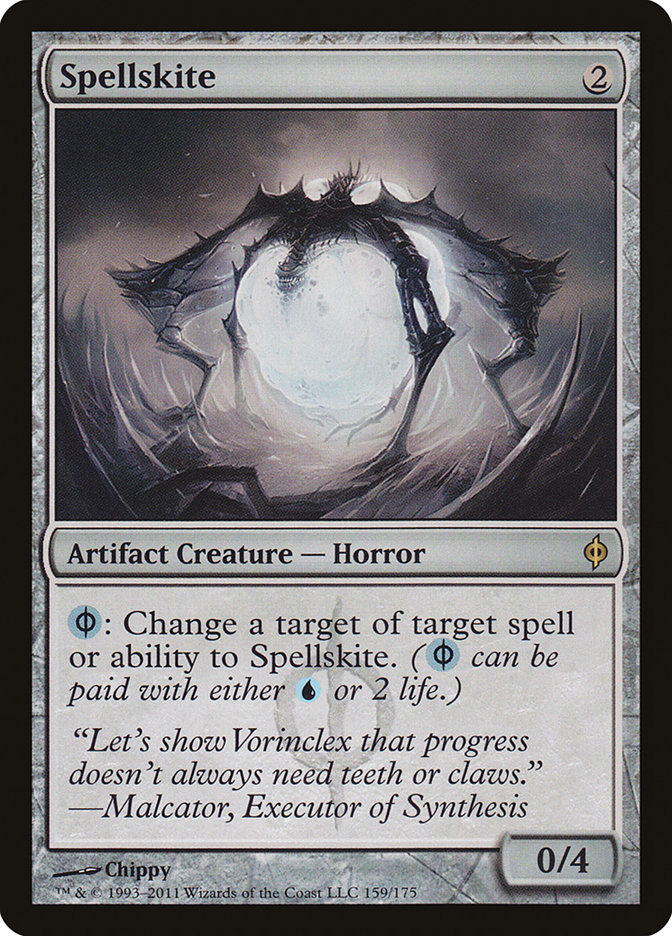
People play Spellskite in too many Modern decks. Even worse, when they do play it they sideboard it in way too often.

Spellskite is not a baseline good card in 2019 Modern. If you are going to play Spellskite to protect a card you control, you should probably just play another card that matters or a protection spell that costs one instead.

Spellskite in 2019 Modern is a hate card for pump spell strategies like Infect. Or maybe a hate card against very specific other effects with some upside. If you are mainly redirecting Path to Exile, it isn't good.

Wait, When Did That Happen?


I played a Modern Pro Tour where I distinctly remember narrowing my decision down to three decks, and all of them had multiple Spellskite in the 75. That was September 2012.

I played three Spellskite main deck at Pro Tour Eldrazi Winter and my deck was legitimately great. That was February 2016.

Going forward from there, I think I can pinpoint the exact date Spellskite became bad as February 19th, 2017. I think that might have been about the end of the road

Two things happened right then.

First off, Gitaxian Probe’s banning made Infect much less popular. But that’s the hate card angle, not the Spellskite just being good angle.

February 19th, 2017 was Grand Prix Vancouver. Eric Severson Top 8ed the Grand Prix playing Melira Company. He played against a black attrition strategy and was promptly dumpstered out of the event. That deck doing the dumpstering was Jund Death’s Shadow.


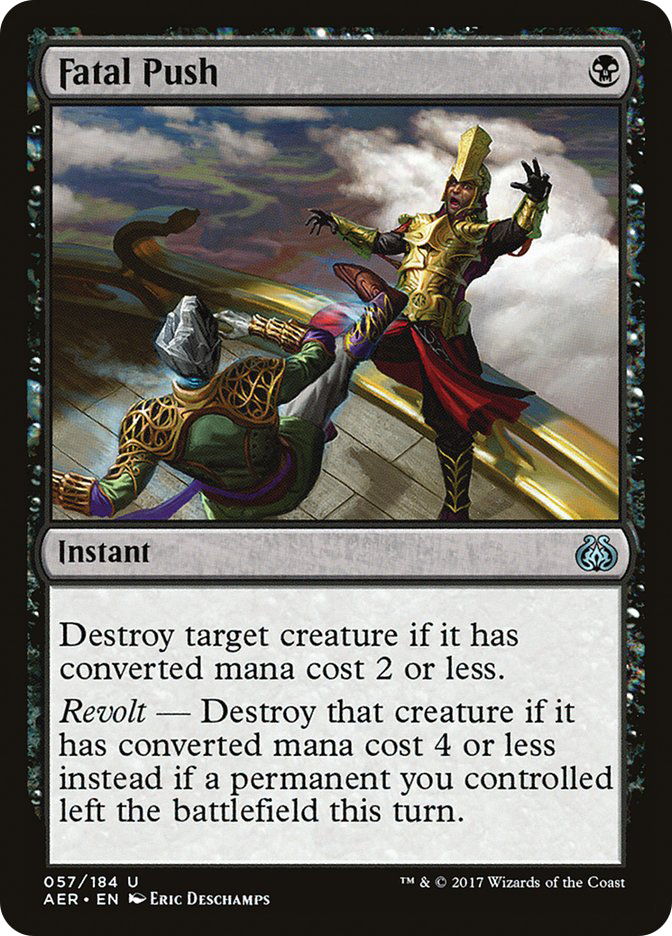
The card that killed Spellskite in the literal and metagame sense was Fatal Push.

End Of The Lightning Bolt Era


This wasn’t just Spellskite hit by Fatal Push. This was basically the whole format. From February 2017 though October 2017, you couldn’t really beat Death’s Shadow. There was a half a decade of inertia from Modern being a Lightning Bolt format, not a Fatal Push one, to override.

Fatal Push is just one mana removal, and it isn’t like Modern didn’t have to deal with one mana removal before. Lightning Bolt and Path to Exile have been format staples since its inception. But you can’t really Path to Exile on turn one or two without a real cost.

And Lightning Bolt has a specific cap. It didn’t hit Deceiver Exarch, Wall of Roots, Tarmogoyf, Restoration Angel, wow this list has a lot of cards that aren’t remotely playable any more.

And it certainly didn’t kill Spellskite, meaning that your opponent had to spend two mana on removal to answer your Spellskite.

Fatal Push had none of those qualms. Spellskite against Jund Death’s Shadow ate a one mana removal spell and that was the end of the story.

One Mana Modern


Really, Fatal Push was the start of the era where no matter what you did in Modern, it could be undone for one mana. It isn’t just Fatal Push doing this. Once Fatal Push changed the rules so that a four toughness two drop was in range of dying, it was no longer relevant that it didn’t die to Lightning Bolt. Which means there was little reason to play things immune to Lightning Bolt, and suddenly that card also killed everything for one mana.

There have been three natural reactions.

None of them are actually playing cards that cost five mana. Get real here.


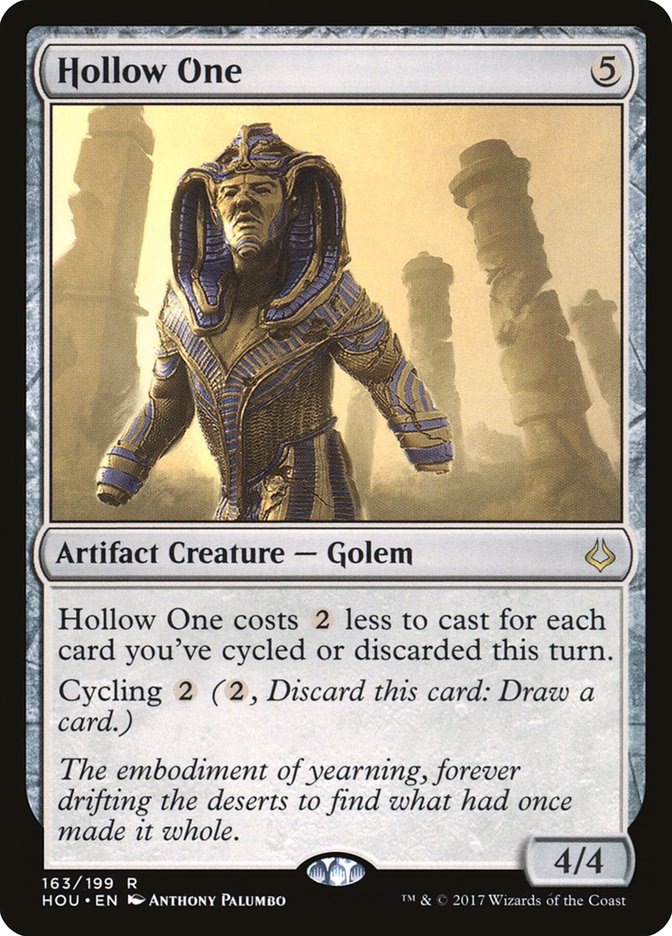
Break rules, and produce things that cost less mana but technically don’t. Hollow One, Gurmag Angler, Scrap Trawler.


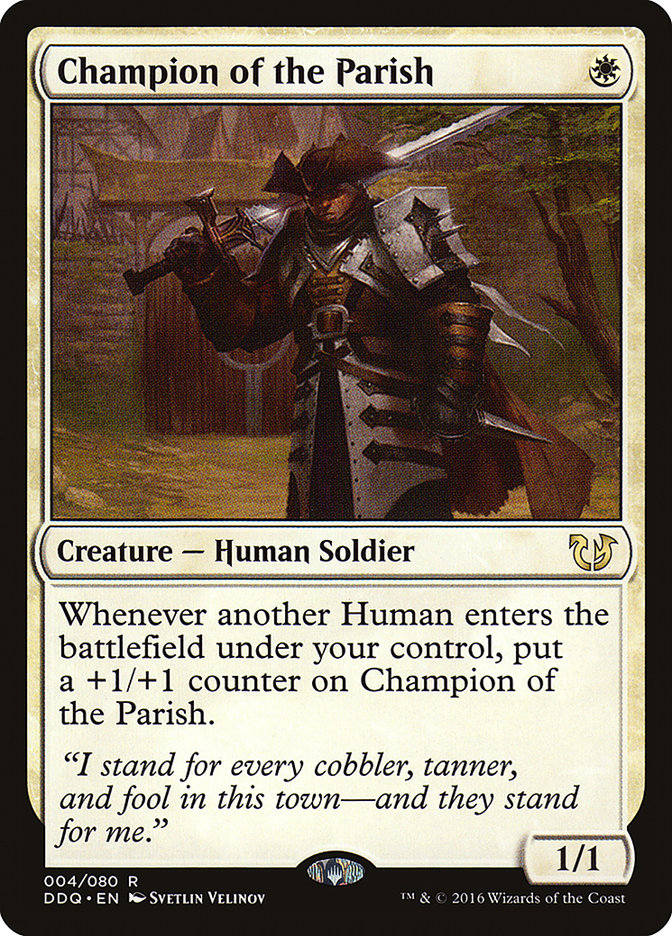
Play only things that exchanging for a one mana card is fine for, and more of them than they have removal. Champion of the Parish, Thalia, Guardian of Thraben, Goblin Guide.


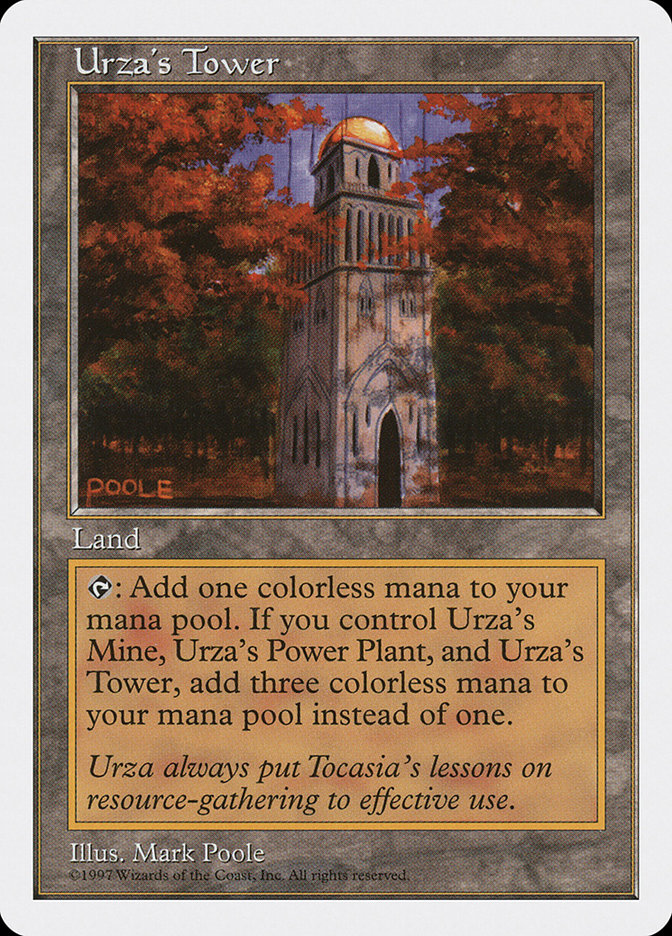
Don’t play things that die. Urza’s Tower, Prized Amalgam, Arclight Phoenix.

These as a whole are also what accelerated Modern. You have people playing a bunch of cost reduced cards, one cost threats, and non-interactive decks. The second order effect of Fatal Push is why no one plays Pia and Kiran Nalaar any more. Notice how some of these are even zero mana options. I don't think we are breaking that barrier any time soon, but I won't be shocked when it happens.

There’s also a modularity associated with one mana plays that has accumulated. You might be familiar with this if you played Hearthstone odd/even payoffs, but there’s a mathematical function of mana efficiency here. If two drops are your optimal low cost card, the game is way slower because of the gaps in when you get to play multiple spells and use all your mana. Turn two and turn three look the same, turn four and turn five, etc. So you can fill in the gaps with clunkier cards, and mana curves exist. (Thanks to Corey Burkhart for putting this into words)

If you have one drops, you just get to always use your mana for the maximum number of actions. As long as each of those cards is worth about one cardboard-action (ie. you aren’t spending multiple one drops to exchange for one of their two drops), you just come out ahead because you do more things. Or the deeper effect of getting to trim lands, then draw more spells, and take more effects that way. This is the Delver of Secrets - Ponder problem from Legacy and Pauper.

So you play Spellskite. It costs your second turn or most of your third turn. They play a removal spell, it costs them a fraction of whatever turn, and wow does that suck. If you just had a different threat and they didn’t have Fatal Push that would be better. If you had a one mana spell it would be better.

That’s why Spellskite sucks. Unless of course you get to spend two mana and turn off their deck. Spellskite is to Bogles as Stony Silence is to Affinity.

And before you say it, yes I did play Spellskite recently in Whir Prison. It's a reactive hate card there. Welding Jar is your maindeck better Spellskite. Spellskite is your Spellskite against very specific things like Shattering Spree and Echoing Truth, which when you get your lock online are the literal only cards that matter. Sometimes blocking is an upside, sometimes improvising is an upside, and it rarely trades for a one mana card.

Modern Horizons


Where does that put our hundreds of new, targeted designs from Modern Horizons?

Let’s look at some previewed cards:


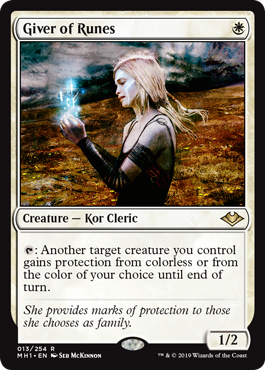
Giver of Runes is the textbook example here and the card that prompted this whole Spellskite discussion. It costs one mana and forces a trade for a one mana spell, which runs them out of answers for your other stuff. Giver of Runes will almost surely make a splash in Modern.


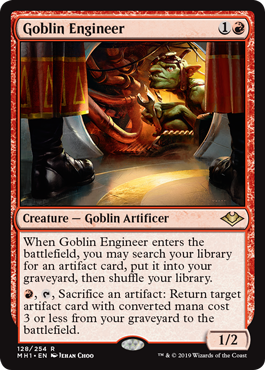
Goblin Engineer is somewhere in the middle. It does force a removal spell, but it trades down on mana for that. So you want to set up a spot where the artifact search to graveyard matters, and losing it to a one mana removal spell still leaves you up an Entomb. Goblin Engineer will be good in a narrow range of strategies where that Entomb is a big deal, with the obvious one being Thopter Foundry - Sword of the Meek


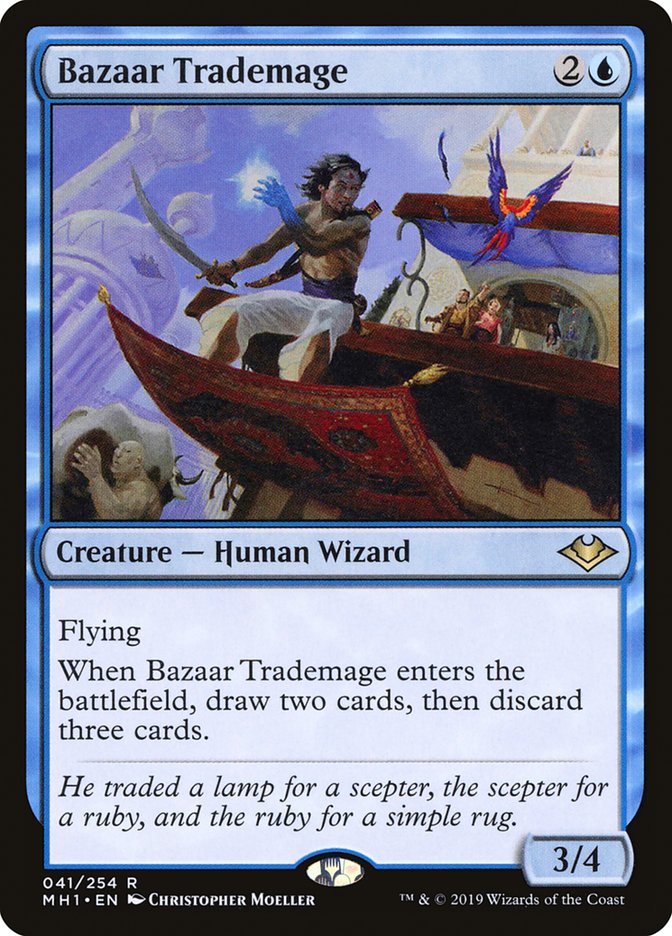
Bazaar Trade Mage is the peak of the one mana issue so far. Why are you paying three mana for an effect that costs one mana (Faithless Looting)? You are down a card on a Fatal Push, so you are up…. Three discards? Gross.

So, when you think about Modern Horizons, think about the cards in context of one mana alternatives and interactions. Can you do this for one mana? Do you get wrecked by a one mana card? If you can't figure out how your spell is favorable against the one (or sometimes zero) mana options, try again.

Monday, May 13, 2019

The Death of Competitive Magic Via the MPL


This is where we are. The latest face of the "pinnacle of competitive Magic", unsure what his plans for playing paper Magic are. Who was given an invite and travel to the latest paper Mythic Championship, and just didn't go.

The core of competitive Magic as we knew it for almost 25 years is dying, and the new structure meant upgrade it is the cause.

Why, the First Time?


Mark Rosewater talks a lot about the idea of why different player profiles play Magic. Timmy/Tammy wants to feel something, Johnny/Jenny wants to make and discover something, and Spike... well they say prove something, but I think that's off. 

Wanting to prove something gets you to beating people at the local shop to say you won, but that's it. Why does anyone play competitive Magic beyond that level?

It's about the art of self improvement.

I've long pushed for thinking about Magic, and especially tournament Magic, as an artificial system of binaries and absolutes. Previously this was in a discussion of ethics or overall purpose, but in this case of learning and drive it's a huge upside. 

There's a binary system of absolute truth and falsehood, defined largely by the rules of wins and losses. It's slightly obscured by chance, but part of the process is learning how to gleam that slightly obscured truth. The confounding factors are just numbers and wizard rectangles, much easier to piece together than non-artificial systems with confounding factors that exist beyond defined bounds.


Eventually, it goes beyond learning the game and learning at the meta-level of learning how and what to learn. After a few times getting stuck against a wall, you start seeing the pattern of how to start finding the ways out of that part of the progress maze. And then the next time you get stuck it's easier to the pattern forward, and so on. And each time, you are rewarded with a sugar cube for solving the maze. And by sugar, I mean money.

There were always clear goals to push towards. Not skill and theory, but tangible goal posts from event finishes. The Pro Player Club was a great implementation of this, with each tier being a step up in how much your results stuck, a boost to the next level, and with a natural end game of content. Even people who won a Pro Tour, won two Pro Tours, made the Hall of Fame came back because they wanted to see if they could do better next time.

Because next time, the game changes and you have to figure it out again. And you aren't competing against computer-defined behaviors like a video game or repetitive barriers, but your competition is the Sisyphean task of out gunning other people making the same progress. The system was consistently rebalanced to provide some inertia to those who were successful, but not so much they could case their efforts and not idle back up the hill next season.

Money, future chances at money, future chances at the same challenge you entered in the first place. All great stuff.

(I'm unsure any of these incentives exist any more.)

The other answer, outside psychographics, is the people. Namely a group of people interested in the same goal of self improvement, speaking the same language, willing to share information and good times along the way.

Competitive Magic captured people over the years as a struggle to self-improve, to out perform others, but in a way that brought people together in the pursuit with incentive drops along the way.

But it's all useless and artificial? Not really. These abstract skills are probably some of the most useful, and many people who excelled at competitive Magic have successfully translate this into whatever field they want. There's even more about understanding luck and failure, playing to your outs, but that's just the lessons you learn on the way to the goal of learning self improvement.

The Monkey's Paw


For years, the constant complaint about the top level of competitive Magic, or professional Magic, was the rate of return. I've been qualified for every Pro Tour from 2009 through now, largely on Pro Club status. I literally won one. Tournaments were loss leaders for content production in the professional Magic economy. Or maybe they were heavily subsidized excuses to fly around the world and hang out with friends. I always liked that view better.

The other issue was lack of organized support. The system existed, but the publicity potential was squandered compared to other avenues. There's a classic tale along the lines of a player known from another circuit being referred to as a Hall of Famer, despite being at their first Pro Tour, and the player hearing the reference being an actual five Pro Tour Top 8 Hall of Famer who was completely unknown to the person speaking.

I think we got what we wished for, but definitely not what we wanted.

Loss of Traction


With the initial MPL announcement, the end of the Pro Club was announced. There was no replacement for non-MPL Pros to stick around at Mythic Championships beyond spiking a good result.

A similar announcement occurred years ago, in 2011. In a similar fashion, no replacement was announced. The end result then was a really awkward roll over to just revert to approximately the same thing, but in the uncertain period I wrote about the same thing at the time. I'm mostly just sad I get another chance to articulate the same point better.

Traction based on consistent results is how you keep people around long enough for them to actually improve and become the players you want showcasing your game.

Honestly, the canary in the coal mine was the Silver level under the briefly lived cycle system. You got an invite, but you then couldn't earn another points invite via Silver until all the points used for the first one rolled off. 

In each case, failure is a clean exit point. Any prior investment is just gone, and you are back to square one. When someone won their first PTQ, lost at the Pro Tour, and went home unqualified they had a glimpse of something else and maybe the fire to try again. When a Silver pro fell off and realized they now have to rebuild their small house of cards from nothing and all their previous work doesn't matter, they usually just quit. The old system always left a hook, the starter Pro Points from your failed Silver Pro Tour giving you a reason to base to re-Silver on, the remainder Silver invite from a bad year at Gold giving you one last shot at redemption.

Brad Nelson left the Pro Tour for years under basically these circumstances, almost right after his run to Player of the Year. 

Now, it's just worse. Unlike the Silver roll off I discussed, there's no traction at all. Maybe there's something bubbling in the works, but the utter lack of information on it for months is not promising. Gerry literally quit the MPL in part because of this, so I have doubts anyone actually knows something I don't. This includes even the Wizards of the Coast Organized Play department, which is a line that grew from a joke to probably the truth over the last six months.

That, and the fact that all of the equity that could have supported it is being funneled right into the MPL.

Payment Plans


I've spit out a lot of numbers for how much money is being paid to the MPL players. I'm going to condense this down.

An MPL player's compensation is a $75,000 contract, three Arena MC invites, a Mythic Invitational invite. The last four events pay out about $14,000 a person. A 4/32 shot at a Worlds invite is another $8,000 of value, a 4/32 chance of being seeded into Day 2 of any of the three Arena MCs via MPL League standings is another couple thousand each (all extracted from the equity of the at large invites). Overall, the MPL is around $140,000 a person for the year. The MPL is around a $4.5 million dollar expense in player salaries and expected payouts. I'm not even unbalancing the equity for the fact that the Mythic Invitational, an event advertised as a streamer showcase, pitted them against MPL sharks there as favorites to take most of the event equity.

Wizards of the Coast has a $10,000,000 E-Sports budget this year between all the MCs, Mythic Invitational, Worlds, Grand Prix, etc. If you calculate the budget for Arena events that the MPL is more than half the invited player list of ($3.25 million), you quickly realize that somewhere between 15-20% of the entire Pro Play budget covers just getting the MPL into rooms to play Arena, not even their player and streaming contracts.

33rd place was Jeremy Dezani. Or maybe Corey Burkhart. They got nothing. Or Andrew Elenbogen, Greg Orange, Luis Scott-Vargas? They all got about one Gold status worth of equity, about $10,000, once you balance for Andrew's lack of classic Worlds invite. 


And just them, no one else.

Part of this "Mythic" jump to a $10 million total prize pool was the scrapping of travel benefits for qualified players. Winning a MCQ is now a ticket to the right to front an uncertain amount of money, possibly multiple thousands for things like Barcelona in the summer, flying across the world to get repaid probably $500 later.

Players are being told they can't defer an invite if they can't afford this expense. 

Maybe the stores running the MCQ can choose not to hire a judge so they can include a plane ticket in the prize. Or charge $80 a person. This issue is just being unloaded on the lower level players in higher expenses and worse events. 

If you total up the old prizes, travel awards, then take the new prizes and subtract the unavailable money being paid to get MPL players and streamers to Arena events, I wouldn't be shocked if the annual prize pool available to MCQ winners was reduced.


And you now have established non-MPL Pros, realizing there's not equity in showing up to the biggest events in the game. Or the smaller ones, since coverage and the resulting sponsorship airtime was cut there as part of the expense redistribution.

Mythic Points are so top heavy, and it seems only the top few finishers matter. The extreme level of result required to even be in position to reach that, the level of time investment to grind all the spot-by-spot qualifiers to give yourself the max chances, you are basically shoving all in on your life and some money to even have a shot.

There's not money, there's not invites to future events. There's still the future challenges, the people, and the top level carrot of the MPL, right?

 Magic Promotional League


Through a series of events, some much more forseeable than others, sudden openings in the MPL appeared.

We got THE Mythic Champion Autumn Burchett replacing the first. Good choice, though that does make the MC finals worth 10 times the 2nd place prize of $20,000 and the first place equity about half the total raw prize pool for the MC. And at the time, we assumed it was double dipping a bit on Mythic Points for next year's MPL while giving prior successes zero points (aka Andrew Elenbogen again).

Then again, someone added to the MPL now has zero lifetime Mythic or Professional points.


There was an expectation set that the carrot of the MPL was based on success in the established artificial system. That has been demonstrated to not be the case. Instead your expected viewership numbers translating to Arena income count.

That leaves the people and future challenges as hooks to competitive Magic, or really competitive Magic as a casual endeavor. 

I'm not even sure how far that goes.

When the second opening appeared out of nowhere, me and some friends jokingly made a list of how every MPL member would eventually fall out. One of my favorites was "Ben Stark realizes it is game theory optimal to skip Mythic Championships to stay home and stream Arena draft".

Wait, what was the clip I posted first about Savjz saying attending an MC wasn't worth a week off streaming, or Jeff Hoogland just never going to events unless someone pays him to wear an owl suit?

The incentive structure is literally now telling people to not go to events. Stay home. Don't play anything. It doesn't actually get you into the MPL anyways. 

Or Wizards might suddenly book a crucial Arena qualifier overlapping with a team Grand Prix, long after you would have locked in two friends and booked a flight. 

Streaming isn't really communal. At the volume needed to make it worth doing, it's performative entertainment, with people shouting into a rolling chat void for the attention of the performer.

 So you are told to stay home. At least you have self-improvement for self-improvement's sake right?

Doubtful. Streaming is again entertainment first, education second. There's little reward in being better and learning unless you are the best, more reward for finding a niche and producing Mycosynth Golem videos.

Even if you are aiming for that #1 Mythic spot for raw numbers glory, the structure promotes jamming to try and win, and not losing while figuring out things. This is all sorts of unhealthy, both antithetical to the old competitive Magic search for the truth and teaching all the wrong lessons along the way.

The dark side of this is that streaming is fickle. The eyes go where the hype is, familiarity is not sticky. People play Super Smash Bros Melee regularly in the same way they play competitive Magic, but people watch the newest fighting game in droves in comparison whenever I check the Twitch numbers.

Why, the Redux?


There are still avenues towards the whole process I described as the core of competitive Magic, if you are really into doing it for the sake of doing it. A good Discord is a wonderful place.

But I don't think the people who have seen the other side of things can be told "pay no attention to the man behind the curtain".

One of the first things you learned on the Pro Tour is everyone can win or lose in a Magic tournament. Even if you look to the all time greatest, you aren't looking at a Magnus Carlsen level disparity. It's not just randomness, the game literally changes too much and people catch or lose the thread of what matters for a given day.

This was doubled down on in less fortunate ways in how the first two MPL members were removed. People who play a game aren't assured to be role models in other or any way. They aren't going to be immune to human greed and faults. I have no doubt Yuuya cheated looking at the pictures, my doubts come towards when he gave in. Was it always since he first won a Grand Prix with Tron in 2007, or maybe a few years ago when he looked just short of Hall of Fame status and needed a little more each even to get in, or maybe now when the stakes just got too high to not have someone in the group fold to temptation?

The MPL players are being built up into some paragon of the game's greatest. Can you really view that knowing the margins between them and the next best are so razor thin but the pay gap is infinite?

Do you really want to consume stream content produced primarily for entertainment, when you know the depth the game had to offer?


The old incentive structure is hanging on by a thread, and I'm going down with that ship until it sinks.

After that, who knows? Maybe an alternate tournament circuit that preserves the old style. Maybe a new hobby like rock climbing.

At the least, I feel like I want to go to Grand Prix Seattle and hang out with some of the people I've played with, worked on improving with, from every era.

Will the Twitch viewers from this Arena MC be there for Arena MC Seattle in fifteen years?


Glossary / Comparisons


Silver/Gold/Platinum - Old Pro Club levels, based on total points earned from GP (open) and PT (invite only) finishes. Silver was worth 1 invite when it was earned plus 1 the next year as it rolled over, Gold good for all the invites in a year, Platinum good for extra money.

Pro Tour - Used to pay out $250k total, with flights to the event paid for (almost) all players. 400+ players

MC - Pays out $500k total, no travel expenses, lowest prize $500. 400+ players

Arena MC - 32 MPL players, plus 4 non-MPL rollover invites, plus 16 Qualifiers. Total payout is $750k, or about $14,000 a person

Mythic Invitational - One shot event, didn't award Mythic Points. 32 MPL + 32 personalities, $1 million prize pool. About $15,000 per player.

Worlds 2019 - MC winners, Top 4 MPL and Top 4 non-MPL on Mythic points invited. Average payout is just over $60,000 per player.

Worlds 2018 - PT Winners, and around 20 top Pro Point finishers. About $10,000 per player paid out

Pro Point - Earned by Grand Prix and Pro Tour finishes, based on record or elimination round results. Determined Pro Status and Worlds Invites

Mythic Point - Only earned at Mythic Championships, Arena or Tabletop. Determines Worlds Invites, and nothing else as far as we know.


Monday, April 29, 2019

The Issues with the London Mulligan

The premise is always the same. The worst part of Magic is that sometimes you don't get to play Magic in a game of Magic. People always propose ways to fix that. Every time, the problem with their solutions is the same.

The best part of Magic is that games are constantly unique. You have to adapt to different situations, and two matches between identical decks can look massively different. Every time you try to reduce the variance responsible for "non-games", you eat into the variance that makes Magic great.

The Vancouver mulligan was definitely on the right side of this balancing act despite initial concerns. It was comically obvious the first time you played with it the rule was a strict upgrade. You immediately learned mulliganing for the nuts was unreliable, and that keeping riskier six card hands was less of a crap shoot. All upside.

The London mulligan is not on the right side of this balance. My first reaction was anything but it being an obvious upgrade.

If you want the short version: the London mulligan homogenizes game play, promotes mulligans in ways that further push this, and trades "non-games" where someone doesn't take actions with "one note games" where someone takes exactly two or three actions and the other person either answers them and instantly wins or misses and instantly loses.

The Fair Side


It isn't entirely fair to the London mulligan to judge it by the broken half of things from Modern. It was largely designed to make mulligans less painful in Standard and Limited.

The problem is it doesn't.


In Limited, too much of the game is determined by raw quantity. "Every draft deck is a form of midrange" is the classic saying, and part of that is playing five and six cost cards that require you to invest five or six cards into lands. Every time you mulligan, the cardboard cost to play lands is much larger relative to your hand size. You can't hit all your lands and plays due to the lost card. Mulligans in Limited still suck with the London mulligan rule.

Same with Standard most times. Luis mulliganed two non-functional hands against Andrew at Pro Tour Guilds of Ravnica. Even if he stacked his five or four card hand he would be massively behind to a reasonable seven. I doubt any simple solution that still leaves someone down cards combats this sufficiently.

That means there are three min-max viable plans after a London mulligan. Ship your end game and hope an early curve dunks on your opponent, keep some rare that solos the game and just enough to tread water to get there, or keep no early action and hope you don't die before casting a couple heavy hitters.

This is not the most dynamic game play. I would categorize the first two categories of uninteracted aggression or rare as close to non-games, and the last option of hoping their hand is slow having a high percentage of non-games as well. The word polarized comes to mind, where old mulligan games were more mixed plans and shifting struggles against the lost resource.

So instead of non-games from turn zero, you have games where people play cards for a bit but continuing decisions don't exist or don't matter. This is just as bad, aka the Solforge problem or the Turbofog issue. It's better for people to be done with a non-game faster than to spend more time for a marginal percentage of their opponent's draw horribly failing, or to just push the variance off to later draw steps where you need to hit perfect to keep up pace. This is doubly true in online platforms where you can just queue up again if you lose fast.

Aside: this may be less true on Arena because of the ladder system emphasizing every match win. In Magic Online leagues where you just lose and instantly rebuy one bad match it is easy to write off in a session. But the Arena loss sticks to your rank. This is a whole separate discussion on why ladder systems are unhealthy, where emphasizing tilt over simple bad luck is only one piece of the puzzle.


I'm overselling this a bit. As always, the first mulligan is certainly something you can overcome in a dynamic longer game. Divination isn't three mana win the game. But five cards? I still struggle to imagine dynamic Limited games where one player started down two cards and forced themselves down a non-scrappy plan with mulligan selection.


There's also a boost to conditional cards from this mulligan rule that I really like. One of the issues of conditional cards in Draft, even pump spells, is that they are liabilities if you mulligan and struggle to find a spot to covert them to true value. Now they just go to the bottom of your library, and Limited is deeper the more reasonable but unique effects people get the choice of playing.

Aside: forcing people play a bunch of mediocre conditional cards is how you get Avacyn Restored, giving them the option is how you get all time greats like Innistrad or Iconic Masters.


In Standard it is much the same. If Mono-Red Aggro mulligans, it is looking to keep one drop, two drop, three drop, burn spell, two lands next hand. The late game is hope to draw well or hope they don't get there.

I keep using the word dynamic, and I think dynamic games are the loss here. The puzzle of how you want the game to play out is much more solved from turn zero, especially as you are incentivized to try again on hands that don't execute it well. This then echoes back to opposing hands, where they are incentivized to combat your scripted plan, and back and forth.

The London mulligan does make something like Sultai midrange mirrors way more dynamic as your sixes are more likely to recover your card with explore creatures and play up the curve, but I don't think Magic really needs to promote that specific effect more. Value bodies up the curve is already the defining strategy of Standard over the last several years.

Again, the first mulligan doesn't assure that any of this precise scripting happens, but the second one sure does reduce games to it.

I'm also thinking mostly from a player and analytics perspective. I'm sure a game where someone plays some cards, gets hard bricked, then loses broadcasts better than someone doing nothing, even if in both cases the outcome was almost certain from the start.

The Unfair Side


This is the real bad stuff.

Starting from Standard, the biggest issue is probably the high impact hate card one. The London mulligan makes it extremely probable you find a specific card. If that is a card that breaks a matchup, you can approximate sideboard games as that card showing up and both players warping everything around it.


This isn't a consistent pattern across Standard, but it exists in some spots in almost every Standard format. Cry of the Carnarium versus Azorius Aggro. Rampaging Ferocidon or some other hate against God-Pharaoh's Gift. Some swingy life gain spell against Mono-Red Aggro. Kalitas, Traitor of Ghet against Rally the Ancestors.

The reliability of these hate cards when they exist makes the idea of a secondary plan less a small shift and more of a requirement. You have to aggressively mulligan to anti-hate, or just give up on playing the basic strategy you registered two games in a match. It's one thing to have to fundamentally repurpose on your chosen strategy because they have full deck coverage, it feels shitty when it's because one card exists. And its not like you can make a format without those hate cards, because an extra consistent linear deck with no answer is bad news. Or not make a format without potential for these decks, otherwise we would have that and not Aetherworks Marvel or Nexus of Fate.

These one card wins aren't restricted to sideboard games. The extreme of this would have been Mono-Black Devotion under this rule, with Pack Rat or Underworld Connections. More recently some decks could never beat Cryptbreaker, Hazoret the Fervent, The Scarab God, Tireless Tracker. Five cards or seven, these just override any disadvantage. Again, if Magic could exist without these occurring reasonably often it would by now. Or at least the post-Mana Leak, post-Baneslayer Angel, post-Inferno Titan design era.


I think it's fairly straight forward to say more Pack Rat games is not good for the game.

After this, we leave Standard for older formats.


One thing we quickly found in testing London mulligans in Modern was decks that couldn't have a reliably good draw off five cards didn't gain a lot. It could be due to card quantity, like Amulet Titan, or a lack of redundant pieces, like Goryo's Vengeance. The first mulligan gave you one more shot, but the upgrade from the Vancouver mulligan to the London one wasn't huge. It was abusing the second or even third mulligan where stuff drastically diverged.


The decks that meshed low required card count and redundancy were the winners. Tron, Dredge, Cheerios, and Simian Spirit Guide - Chalice of the Void. None of these are really fun strategies. They also aren't unbeatable, largely because of the degenerate sideboard interplay I mentioned prior. You can sweepingly ban these decks, but are they too good on power? Can you assure that next set something else won't break this way? Are you just turning Modern into another midrange format, both with a power level chop and a push towards midrange decks finding their Fatal Push hands or Stubborn Denial hands more correctly?

The margin between linear but too consistent to be reasonable playable and linear but too inconsistent to be playable dries up real fast with the London mulligan. More unique game play is lost.

Aside: back to Standard, the decks that can win off one, two, three curves are built for this redundancy and I would expect to be able to regularly have five card hands that fire off quick beats.

Even within the context of these decks, unique game play is lost. Playing against medium Dredge and Tron hands used to be fairly interesting with the other player really judging how they can best use the extra time, and now those medium games don't exist. In testing we would mulligan every Dredge seven or six without multiple discard enablers. Few Dredge games were the slower build up games where the opponent had to figure out how quick they needed to play before things snowballed while still avoiding key points like Conflagrate. It was just a bunch of turn two eight power nut draws.


This then pushed hate cards towards the more absolute and fast, like Leyline of the Void. Sideboarded games became very scripted. Death's Shadow had two types of openers: Leyline or no. Dredge could almost always mulligan to an answer and enabler. The non-Leyline hands didn't beat Dredge sevens, but they might beat lower hand sizes. The Leyline hands won on the play via Thoughtseize on Nature's Claim, often lost on the draw to turn one Nature's Claim, or had double Leyline and it was all over. No decisions about what to Surgical Extraction, fewer about Dredge staggering damage production to minimize Death's Shadow sizing. Just binary outcomes the whole way.

Additional mulligans into functional games is also a strain on tournament logistics. Normally a mulligan to four means a quick game. If you now both mulligan more and play typical games more and (partly because of open deck lists) play into interaction more, rounds just take longer. You are losing minutes a match in shuffling overhead in Modern, and despite a much more aggressive format I would bet the average Modern match at MC London took longer than at PT Bilbao.

Now that I mentioned open decklists, that shift doubly amplifies all the issues with the London mulligan. More pre-scripted game play derived before the games start, lowered risk for aiming for the best possible hand for the situation, more mulligans and time spent shuffling even by decks that aren't linear.

A Fix


The problem is the same in every case I described. Five card hands with the London mulligan play Magic, but it doesn't promote good Magic. But the London mulligan fundamentally promotes maximizing decks for mulligans to five.

How can we shift this?

My best suggestion is increase the cost of that second mulligan. The mulligan rule I would like to look at is similar to the London mulligan, but always bottoming one card and losing access to cards after the first mulligan. So start on seven, then mulligan to seven and bottom one, then six bottom one, five bottom one, and so on. This is two steps from the Vancouver mulligan, giving you both the extra card of info prior to a mulligan decision and the ability to send back any of your cards. It preserves the London mulligan in full for the first redraw, giving normal decks a better shot at keeping a closer hand, but starts to punish more aggressive mulligans. It also simplifies the selection process, similar to why Scry X Mulligan was rejected in favor of the Vancouver mulligan.


The space I haven't explore is drastic decision alternatives. Pokemon used to give the opponent an extra card (I know this is bad), there's the classic one shot cycle some cards (one shot also not great), and probably even more options along these lines. Go down a card, but then Abundance the first draw choosing land or non-land (some broken one land applications).

I get that there are a number of pressures with the changing landscape of Magic that promote a shift in how mulligans work. Arena and coverage have new demands, but from a depth of play and physical logistics perspective the London mulligan has too high a cost for too little benefit.


Wednesday, March 27, 2019

Azorius Aggro Guide - Arena Mythic Top 100

Scoreboard


I picked up Azorius Aggro at Platinum 4, after getting sick of battling Grixis nonsense with Sultai and only winning 55% of my matches.

I haven’t kept exact stats, but I’ve won 70-80% of my matches with Azorius Aggro since then. I know I lost around 8 matches from Plat 4 to Mythic, and at most the same number since hitting Mythic. I probably even padded my numbers by switching to Sultai and spewing off some ranks early on only to win them back with Venerated Loxodon.


The Loxodon Rule


Venerated Loxodon is the best card in Azorius Aggro. Benalish Marshal and Legion’s Landing are in the top five. Two drops are horrible at maximizing those cards.

It’s way harder to turn three transform Legion’s Landing or cast Venerated Loxodon if you played a single creature on turn two. You also want to cast a three drop on turn three and don’t really care about a two drop on turn four. If you draw multiple two drops your hand starts with a bad card.

If there were more playable one drops I might play no two drops, but three Hunted Witness is my limit on creatures barely worth the cardboard they are printed on. Three Adanto Vanguard is a necessary evil, and I almost never configure my deck to have more than four two drops.


The List and Quick Notes


(Deck image via MTGGoldfish)


4 Skymarcher Aspirant (RIX) 21
4 Snubhorn Sentry (RIX) 23
4 Dauntless Bodyguard (DAR) 14
4 Legion's Landing (XLN) 22
3 Hunted Witness (GRN) 15
3 Adanto Vanguard (XLN) 1
4 Benalish Marshal (DAR) 6
4 History of Benalia (DAR) 21
4 Venerated Loxodon (GRN) 30
1 Ajani, Adversary of Tyrants (M19) 3
3 Conclave Tribunal (GRN) 6
2 Baffling End (RIX) 1
12 Plains (RIX) 192
4 Hallowed Fountain (RNA) 251
4 Glacial Fortress (XLN) 255

3 Tocatli Honor Guard (XLN) 42
1 Adanto Vanguard (XLN) 1
2 Ajani, Adversary of Tyrants (M19) 3
1 Conclave Tribunal (GRN) 6
2 Baffling End (RIX) 1
1 Spell Pierce (XLN) 81
2 Disdainful Stroke (GRN) 37
2 Negate (RIX) 44
1 Island (RIX) 193

Don’t mess with the mana curve. See the Loxodon rule. This is my only big deviation from Marcio Carvalho’s Mythic Championshiop Top 8 list.

Don’t keep most four land hands. Almost all of the exceptions are double History of Benalia hands.

Don’t play one drops that get free rolled by Kraul Harpooner, people will sideboard it in just to block. Healer's Hawk is still a stupid 1/1, it's not actually better than Hunted Witness.

Five removal has been decent. Multiple Conclave Tribunal is clunky, hence the 3-2 split.

Unbreakable Formation is horrible. The power-to-cost rate is not the insane six or seven for one like your pump creatures. Most decks beat you by killing your creatures, which makes Formation blank. People are playing Cry of the Carnarium over Kaya’s Wrath. The only matchup Formation is good for is white mirrors, where both the indestructible and vigilance come into play. Ajani at least has redeeming qualities as your 9th pump, like saving sideboard slots.

I haven’t tested Tithe Taker in a while, it may be better than Adanto Vanguard or a 2-1 split in either direction might be right. Full disclosure, I didn’t have Tithe Takers or rare wild cards on Arena when I started my run with this deck and I kept winning too much to mess with it. Overall Tithe Taker is better against Red, White, and Blue aggro decks, it’s debatable against Wilderness Reclamation's counter magic and Esper Control, and Adanto Vanguard is way better against Grixis or Sultai Midrange and Izzet. Tithe Taker only massively better against Mono-Blue which is already a good matchup, whereas Adanto Vanguard has lots of spots it just can’t die and wins the game.

The sideboard Spell Pierce could be a third copy of either other counter, I haven’t done the math on the Island, and the third Ajani, Adversary of Tyrants also isn’t a requirement. If you have good ideas to use those slots on instead feel free to try them.

I’m not going to bother too much with matchup favorability. It isn’t worth it. You have “rough” matchups, but basically all of those can be solved by a good Loxodon draw. Your good matchups just mean your more middling draws are also good. If you want to read between the lines, me saying you really need a pump effect draw means the matchup is unfavorable.

 Also, given my win rate clearly my plan for "bad matchups" has been just crush them anyways.


Matchup - Sultai Midrange


I wrote about this from the other side on StarCityGames a couple weeks ago. They have four ways to win. From least to most beatable: They can cast Finality, they can trigger Wildgrowth Walker, they can resolve Hostage Taker and recast things, and they can play idiots into a Hydroid Krasis for six. Your one drops into pump draws crush their Krasis draws, compete with Hostage Taker, and can struggle against Wildgrowth Walker. The plan against Finality is hope they die first or they don't draw it. Sometimes you win if they don’t keep a creature through it and you draw really well or have Adanto, the First Fort.

If you get lucky and can make a 5/5 that survives Finality, do that. Remember that Benalish Marshal usually dies to Finality and makes this fall apart.

Sideboard:

-3 Adanto Vanguard
-1 Conclave Tribunal
-3 Hunted Witness

+3 Tocatli Honor Guard
+2 Ajani, Adversary of Tyrants
+2 Baffling End

I don’t mess with counter magic against Sultai. No matter which one you choose half their plans just win through it regardless, and your best plan against both Finality and Hydroid Krasis is just kill them first. Once you start bogging your deck down with reactive cards you are playing into their game of cast one spell a turn, Sultai’s punch harder. This is also why you have to trim on a Conclave Tribunal, too many answers is a fast way to lose.

Your sideboard focuses on stopping their second best plan of Wildgrowth Walker, as all their other plans require time and land drops that Wildgrowth Walker often helps bridge to. Tocatli Honor Guard also shuts off Hostage Taker. Ajani, Adversary of Tyrants layers Tocatli Honor Guard through removal and gives you threats that survive Finality. The creatures you cut are just the worst ones in the deck, with the two drop cap still applying. Adanto Vanguard isn't bad, it's just worse than Tocatli Honor Guard and worse than curving out.

On the play I often trim a Baffling End for any one of the cards I take out, but you can’t Conclave Tribunal a turn two Wildgrowth Walker on the draw and need the extra two mana answer.

Yes, Tocatli Honor Guard is a nonbo with Venerated Loxodon. I don’t care, because you usually win if Honor Guard lives and you usually win if you cast Venerated Loxodon and trigger it. If you draw both just figure out if you need to shut off explore and Hostage Taker now or can just play the 1/3 after making seven power for two mana.


Matchup - Goblin Chainwhirler (Gruul Midrange, Red Aggro, Jund Deathwhirler, etc)


This matchup has two key issues: Goblin Chainwhirler, and the fact that all of these decks have more threats you have to kill than you can have removal. Runaway Steam-Kin, Goblin Chainwhirler (first strike sucks), Experimental Frenzy, Rekindling Phoenix, Growth-Chamber Guardian, Skarrgan Hellkite, Gruul Spellbreaker, etc.

So step one is figuring out how to not lose all your things to a one damage sweeper, and step two is figuring out how to navigate a bunch of threats. The answer is usually just play a mass pump effect and kill them. If you don’t do that, you probably die. If you have an early Venerated Loxodon you are a massive favorite, if you don’t you are solidly behind.

If you see a basic Mountain early and have options on casting one drops, see if you can leave yourself only losing one thing to a Chainwhirler trigger. Hunted Witness and Snubhorn Sentry survive, and if you cast Dauntless Bodyguard after other one drops you can save something.

Sideboard:

-3 Adanto Vanguard
-4 Skymarcher Aspirant

+2 Baffling End
+1 Conclave Tribunal
+3 Tocatli Honor Guard
+1 Ajani, Adversary of Tyrants

Creatures that die to Chainwhirler with no hope of leaving value around are gone. More removal and answer to Chainwhirler trigger are in. Jam hard, good luck. The matchup isn’t as bleak as I’m making it sound, but it’s real easy for mediocre hands to die horrible deaths.


Matchup - Esper Control


I don’t have a generalized plan for this matchup as too much changes based on how they play, revealing what cards they do or don’t have. The quick tips:

-You usually shouldn’t play around Cry of the Carnarium. You should play around Kaya’s Wrath a bit, then as soon as they don’t cast it on an obvious turn play as if they don’t have it.

-Casting a History of Benalia into a possible Kaya’s Wrath with other stuff is less of an over extension than it sounds because the second Knight shows up after.

-Transforming Legion’s Landing is strongly correlated to a win. On the draw against Watery Grave I will default to casting it on turn one to avoid Thought Erasure taking it.

-There can be later game spots where they are low on life, struggling to find an answer to a couple idiots or an Adanto, the First Fort. If you get them in one of these probably no removal, clock ticking down spots where you are low on resources you often just don’t want to cast spells into Absorb mana. If they don’t gain three life, they die.

-Attacking a fresh Teferi from 5 to 3 loyalty with a Knight token is often a solid option so it can’t freely -3 to kill your token. This comes up when your opponent is in the 8 life range against a couple small attackers, where you clearly don’t want to waste a ton of damage on Teferi but they also could stabilize with two one-for-one answers.


Sideboard:

-4 Venerated Loxodon
-4 Snubhorn Sentry
-2 Baffling End
-1 Hunted Witness

+1 Island
+2 Disdainful Stroke
+2 Negate
+1 Spell Pierce
+1 Adanto Vanguard
+2 Tocatli Honor Guard
+1 Conclave Tribunal
+1 Ajani, Adversary of Tyrants

Out go the cards that require you to play into Kaya’s Wrath and aren’t great after. In come a bunch of ways to steal the game by countering Kaya’s Wrath.

Now that you don’t have Venerated Loxodon more two drops are acceptable, and Tocatli Honor Guard stops Hostage Taker. The fourth Conclave Tribunal versus the third Tocatli Honor Guard is a close choice, but too many people have brought in Thief of Sanity on top of Lyra Dawnbringer and Hostage Taker lately.

Update: As pointed out in the comments, I bring in 1 more Ajani over a lower impact card. Having a unique threat is great, but Ajani is a bit on the slow side and runs the risk of giving them something really good to Teferi -3 on so two is about the max.

Matchup - Wilderness Reclamation (Simic Nexus, Temur Explosion, etc)


If they don’t have Root Snare in their deck (Temur), you just gun for a goldfish kill. The one interactive piece to consider is Syncopate, but there’s rare spots you actually play around it that are largely “cast Venerated Loxodon with a mana open over History of Benalia on turn three”. Remember if you have multiple History of Benalia that you want to resolve the +2/+1 ultimate first to force Fiery Cannonade before your Knight token trigger resolves.

If they do have Root Snare (Simic), it’s similar but your goal is to force them to cast their Root Snares as soon as possible as that cuts down their mana to dig with and can run them out of Snares. If given the choice of Benalish Marshal or Venerated Loxodon, I do the math. If Benalish Marshal gives me an out of drawing another Marshal to force lethal next turn, that’s the play.

Sideboard:

-3 Hunted Witness
-1 Ajani, Adversary of Tyrants
-2 Baffling End

+1 Island
+2 Disdainful Stroke
+2 Negate
+1 Spell Pierce

I like having the fourth Conclave Tribunal against Temur Reclamation’s Rekindling Phoenix and Niv-Mizzet, Parun. Simic Nexus is less likely to pass the turn, and Conclave Tribunal for half a Biogenic Ooze is a worse rate.


Matchup - Mono-Blue Aggro


This is a good matchup, but as always they can do weird stuff. This is another matchup where I just have tips and you have to read their options based on plays and Arena priority.

-If you can resolve Venerated Loxodon, you usually win.

-Dive Down is a combat trick, but usually that exchange is fine.

-If they have Siren Stormtamer, Conclave Tribunal can target Curious Obsession. If they have Obsession on a Stormtamer or Mist-Cloaked Herald you can play around Dive Down this way, but Pteramander is often worth the risk to just gun for.

-Not casting spells into counters can come up in tight races versus Pteramander. It's not common like versus Esper, keep an eye on that math.

-If they pass with two mana up doing nothing, don’t lose a 1/1 to Merfolk Trickster. Adanto Vanguard even loses indestructible.

-Conclave Tribunal convoking to leave up two mana for Spell Pierce is a common play.

Sideboard:

-3 Adanto Vanguard
-1 Hunted Witness
-1 Ajani, Adversary of Tyrants

+2 Tocatli Honor Guard
+2 Baffling End
+1 Conclave Tribunal

If you had Tithe Taker, it would be better than Tocatli Honor Guard. Guard used to be much better when Exclusion Mage and Faerie Duelist were typical.

Don’t cut History of Benalia. If they want to have Spell Pierce in their deck let them draw it and leave it open and not counter removal. If they don’t have it, History kills them.


Matchup - Izzet Spells (Phoenix, Drakes)


This matchup is basically the same as the Mono-Blue Aggro matchup, but you get to jam harder and not worry about counters on your threats.

Sideboard:

-3 Hunted Witness
-1 Ajani, Adversary of Tyrants

+2 Baffling End
+1 Conclave Tribunal
+1 Adanto Vanguard

Kill their stuff and kill them. Adanto Vanguard sizing up from a 3/1 to a 4/2 with one pump makes it really important for attacking into x/4 Drakes.

The exact number of Baffling Ends you want depends on how many good targets they have. You want all of them against Izzet Drakes with Pteramander and Enigma Drake, and only two or three if they are a Niv-Mizzet deck that only has Enigma Drake or an Arclight Phoenix deck that only has Goblin Electromancer. In the lighter cases keep in some Hunted Witness.


Matchup - White Aggro Mirrors


Being on the play is a huge edge here. The ways to flip that advantage are multiple History of Benalia or having more pump effects. Occasionally you can reach parity and a flying Skymarch Aspirant ends it but that isn’t typical.

On turn one and two, figure out if you want to trade or are building up to something bigger. Determine your first attacks and blocks entirely based off that.

You might have to use removal in other ways, like holding off History of Benalia, but saving it for a Benalish Marshal is the best case scenario. Try not to Conclave Tribunal their enchantments as they can Conclave Tribunal back and retrigger Landing or History.

Sideboard:

-3 Adanto Vanguard

+2 Baffling End
+1 Conclave Tribunal

Ajani, Adversary of Tyrants is fine as a one of, but more is too slow.


Matchup - Selesnya Tokens


It’s like a mirror, but they have more of the army in a can and pump effects that break things open. Your goal is to land multiple early pumps and force them to start chump blocking as fast as possible. Save removal for Trostani Discordant if possible, but also don’t let them run away with a game.

They can also recover games that would be traditionally unrecoverable in Azorius Aggro mirrors with multiple March of the Multitudes. This is why getting to forced chump range quickly is key. The less resources they keep off using March as a Root Snare, the less the second one snowballs the game.

Sideboard:

-3 Adanto Vanguard
-1 Hunted Witness
-1 Conclave Tribunal
-2 Baffling End

+2 Disdainful Stroke
+2 Negate
+2 Ajani, Adversary of Tyrants
+1 Island

Counterspells are great, as all of their cards that break parity are expensive. If you have the third Disdainful Stroke this is where it really shines. Negate also covers you against random sideboard sweepers they might have, like Settle the Wreckage.

Tocatli Honor Guard would shut down their Venerated Loxodon, but I think your Venerated Loxodons are more important on balance and they are happier fighting 1/1s versus 1/1s. It shuts down half of Trostani Discordant, but not the pump half. It shuts down Knight of Autumn, but you are trimming removal already. I’m not interested in a low impact, two cost, awkward timing creature.